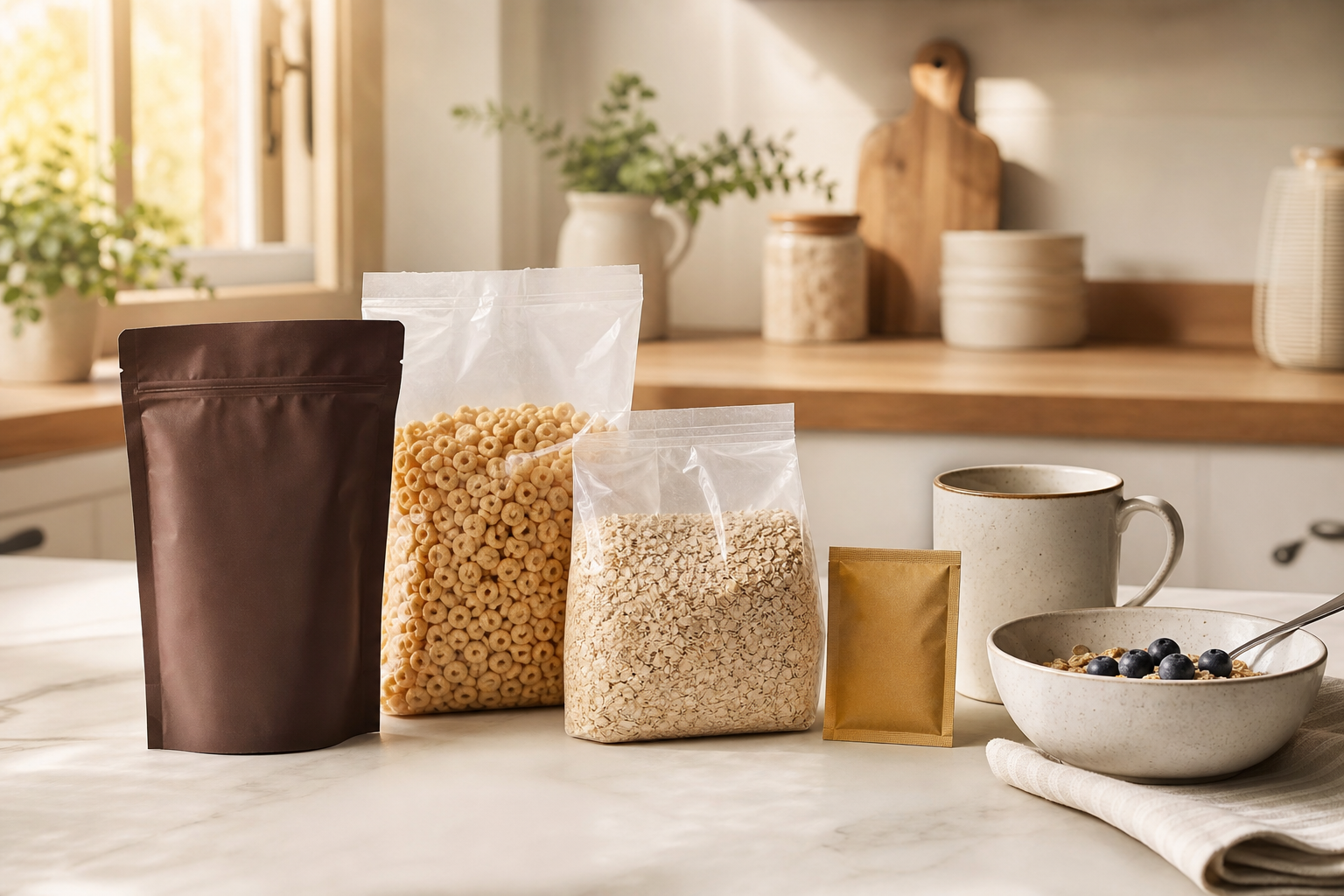
Breakfast packaging is handled during some of the busiest moments of the day. A coffee pouch may be opened before work, a cereal bag may be returned to a cupboard, and a spice sachet may be used beside a cooking area. These small routines affect the way a package should stand, open, close and store.
For packaging teams, the useful starting point is not only the product name. It is the complete use scenario: who opens the pack, where it is stored, how much is used at one time and whether the package needs to remain convenient after opening. These observations help connect a practical pack format with a suitable filling and sealing workflow.
Breakfast products also move through different parts of the home. A coffee pouch may stay near a machine, cereal may be stored on a shelf, and spice sachets may be kept in a drawer. The package should be easy to recognize without relying on complicated labels, and its shape should make sense beside other pantry items. Thinking about these small movements helps teams review the pack from the user's point of view before discussing machine settings.
Begin with the breakfast routine
Breakfast products vary in size, texture and frequency of use. Coffee and oats may be opened repeatedly, while a small spice sachet may be consumed in one preparation. Family-size cereal and grain packs may need a stable base, whereas single-use packs prioritize portability and clean opening.
Record the storage location, expected opening frequency and approximate portion pattern before selecting a bag. A cupboard pack may need good shelf stability, while a lunch or travel pack may need a compact shape and a clear tear area.
Choose a format that is easy to handle
Stand-up pouches can make coffee, oats and other products easy to place on a shelf. Pillow bags can suit lightweight dry products where the package is opened and used quickly. Side-gusset or box-style formats can provide more standing stability for larger household packs.
Opening details should be reviewed at the same time. A tear notch, zipper or wide seal area changes how the user grips the package. It also affects the film width, forming arrangement and sealing area that the equipment must handle.
Match film properties to the product
Dry breakfast products can respond differently to moisture, air, light and handling. Coffee may require protection that helps preserve aroma, while flour, oats and cereal may need a package that remains clean and resistant to puncture during storage. Spices may be used in small quantities and benefit from a compact sachet format.
The film structure should therefore be discussed with the product, storage conditions and seal requirements in view. A supplier can review the intended package and suggest a practical material direction without assuming that one film suits every breakfast product.
Breakfast packs are also seen in different states during the day. A full pouch may need to stand neatly in a cupboard, while a partly used pack may be folded, clipped or resealed. The package should remain identifiable after handling and should not create unnecessary spills when it is moved. These observations are useful when comparing seal positions, gusset depth and the amount of opening space available to the user.
Connect the bag with the filling workflow
Powder products, flakes and free-flowing granules do not behave in the same way during filling. The product flow, target fill, bag width and sealing sequence influence the feeding and dosing arrangement. The machine layout should also allow operators to clean the product-contact areas and change between compatible formats.
Huapai Machinery's powder and granule packing machine range provides a starting point for comparing category options. Final configuration should be checked against the actual product, film and intended package.
Use samples before a final decision
Representative samples help connect the breakfast scenario with production checks. Review film tracking, seal cleanliness, filled-bag stability and opening behavior. Also check whether a partly used pouch can be returned to its usual storage place without losing storage stability. This simple review can support a clearer final package decision. Store sample packs in the intended cupboard or work area and handle them as a customer would. This can reveal issues that are not visible when the package is empty.
- Share product texture, flow and dust characteristics.
- Define bag style, approximate size and target fill.
- Describe storage conditions and opening frequency.
- Review cleaning and changeover needs.
- Keep sample observations linked to the daily use case.
Conclusion
Breakfast packaging works well when the package is designed around real morning habits. By connecting format, film, opening, storage and filling workflow from the start, packaging teams can create a clearer path from product sample to a practical finished pack.
← Back to News