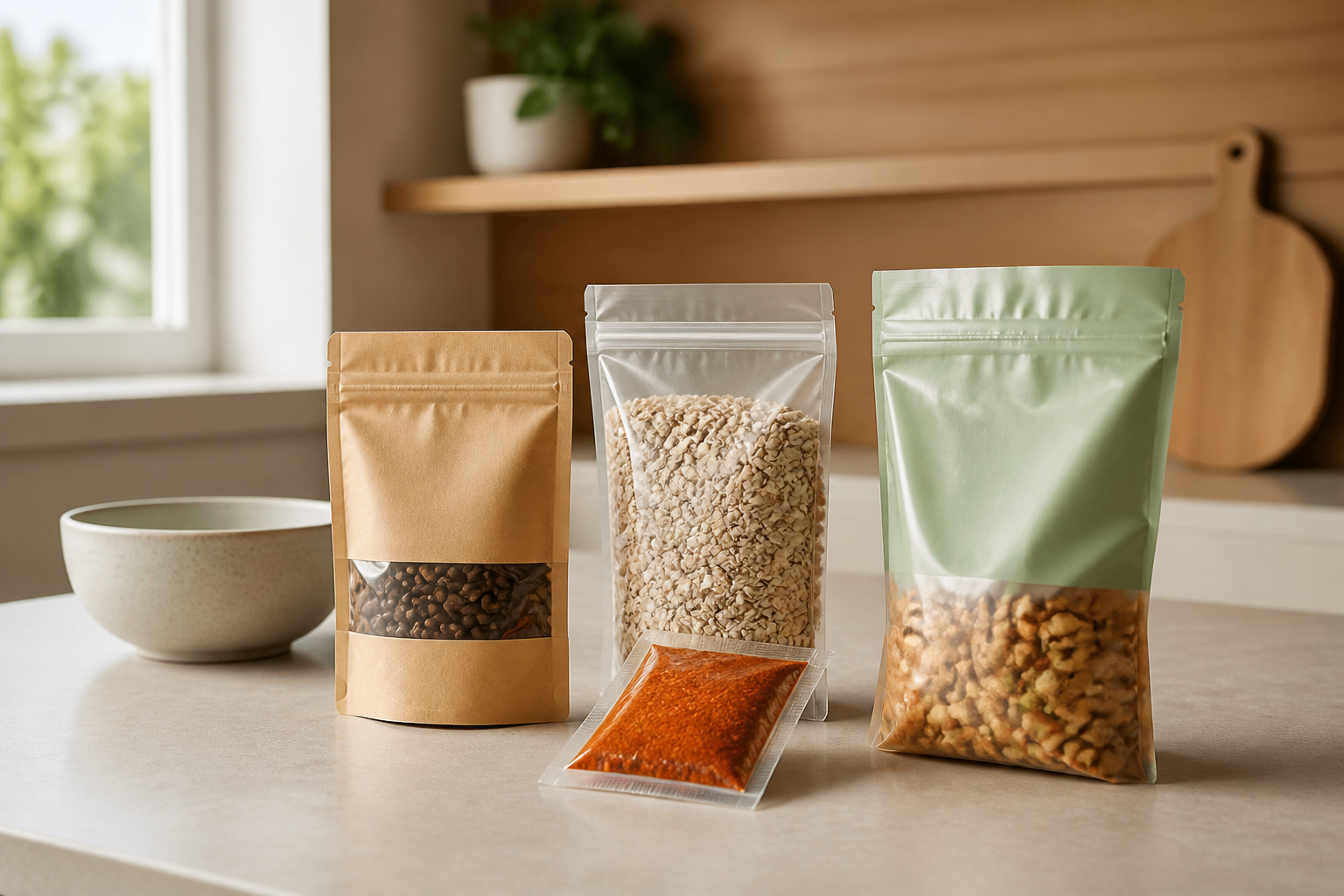
Packaging is part of many small moments at home. A coffee pouch is opened before work, a grain bag is stored in a cupboard, a spice sachet is carried to the kitchen, and a snack pouch travels in a lunch bag. Each use asks the package to do more than hold food: it should protect the product, fit the way people handle it and support practical storage after opening.
For packaging teams, these daily habits are useful starting points. Instead of choosing a machine or bag format only by product name, it is better to consider how the package will be opened, filled, sealed, stored and used. The right combination can make the finished pack easier to handle while keeping the production process clear and repeatable.
Start with the daily use scenario
Breakfast and pantry products often need different packaging decisions. Coffee, flour, cereal and spices may be stored for different lengths of time and used at different frequencies. A family-size bag may need a stable base and a practical resealing feature, while a small sachet may focus on portability and easy opening.
Write down where the product will be used, how often the pack will be opened and whether the package will remain in a cupboard, a refrigerator or a lunch bag. These simple observations help define the bag size, seal position and material requirements before equipment is selected.
Match the pack format to handling
Stand-up pouches are useful when a pack needs to sit upright on a shelf or counter. Pillow bags can suit lightweight snacks, dry mixes and other products that are opened and consumed in a short period. Larger family packs may benefit from side gussets or a wider base because the filled package needs more stability during storage.
Convenience also depends on the opening experience. Tear notches, zipper features and easy-to-grip seal areas can be considered together with the product texture and expected use. These details should be discussed early because they influence film width, forming parts and sealing conditions.
Consider product protection in the home
Food packaging has to protect the product through transport and daily storage. Dry powders and spices can be sensitive to moisture and dust. Coffee and snack products may need protection from air, light or loss of aroma. Grains and other pantry products may need a package that resists puncture during handling.
The suitable film structure depends on the product and the expected storage conditions. A packaging supplier can use the product behavior, target pack size and required shelf conditions to discuss sealant layers, barrier needs and suitable forming methods without assuming that one material fits every application.
Choose a filling and sealing workflow
The daily-use package should be considered together with the production workflow. Powder products may require a controlled feeding method, while free-flowing granules may need a different measuring arrangement. The package shape, filling weight and product behavior influence the forming tube, dosing parts and sealing sequence.
For a starting point, review Huapai Machinery's powder and granule packing machine range and compare the available category with the intended product, bag style and handling routine. Final configuration should be confirmed against the actual material and package through a technical discussion.
Build practical checks into the sample review
Before a packaging format is finalized, prepare representative product and film samples. Check whether the film tracks smoothly, whether the seals remain clean, whether the filled bag stands as expected and whether the opening feature is easy to use. Review the finished pack after it has been moved, stored and opened in the way customers will handle it.
Storage behavior deserves its own check. A pouch that looks suitable when empty may need a wider base after filling, while a small sachet may need enough tear area to open without spilling. Place sample packs in the intended cupboard, refrigerator or lunch-bag context and note whether they remain easy to identify, carry and close. These observations can guide the final package drawing and the equipment discussion.
- Describe the product's flow, texture, dust level or particle shape.
- Share the intended bag style, approximate size and target fill.
- Explain storage conditions and how often the package will be opened.
- Review sealing, cleaning and changeover needs with the equipment supplier.
- Keep the sample results connected to the final daily-use scenario.
Conclusion
Everyday packaging decisions become clearer when the real use scenario is considered from the beginning. Breakfast foods, pantry staples, snacks and other household products each place different demands on the package. By connecting handling, protection, opening and storage needs with the filling and sealing workflow, packaging teams can develop a more practical path from product sample to finished pack.
← Back to News