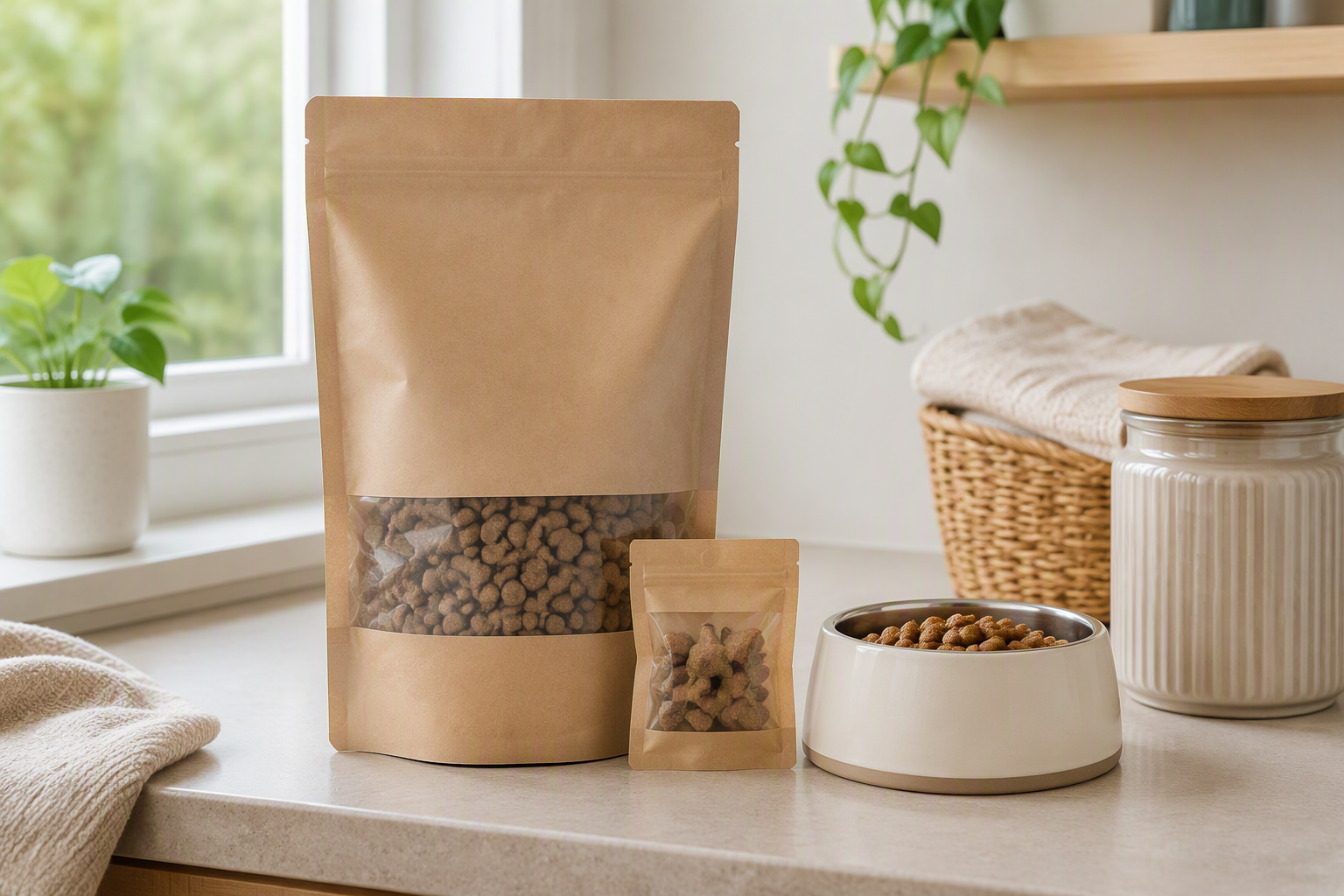
Pet food packaging is handled repeatedly at home. A larger pouch may be opened in a pantry, a scoop may return to the bag several times a week, and a small treat sachet may travel with a pet owner. These routines influence the package shape, opening area, storage stability and material choices that should be considered before a production line is planned.
The most useful packaging discussion starts with the product and the way it is used. Dry kibble, treats, powders and supplements can differ in particle size, flow behavior and sensitivity to moisture. The intended household routine then adds questions about carrying, resealing, portioning and keeping the package clean after opening.
Storage location is part of this review. A large pouch may sit on a low pantry shelf, a treat pack may be kept near a door, and a supplement sachet may be stored with other feeding accessories. The package should be easy to lift, identify and close without making the daily routine harder. Observing these simple actions gives the packaging team a practical reference for format and seal discussions.
Map the feeding routine
Begin by describing where the package will be opened and stored. A family-size pet food pouch may remain in a pantry, while a small treat pouch may be carried outdoors. A supplement sachet may be used beside a bowl and discarded after one serving. Each use pattern can suggest a different pack size and opening approach.
Note how often the package is handled, whether a scoop is used and whether the pack needs to stand upright. These details help define the required base, seal position and practical grip area.
Select a stable and convenient format
Stand-up pouches can support shelf and pantry storage because the filled package can remain upright. Pillow bags may be suitable for lightweight dry products and short-use formats. Gusseted bags can provide additional volume and stability for larger packs when the filled package needs to remain easy to lift.
Opening convenience should be reviewed with storage. A zipper, tear notch or wide seal area can change how the user closes and handles the pack. The final choice should balance product protection with a simple daily feeding action.
Review product flow and protection
Dry pet food can include different particle sizes and shapes. Treats may be irregular, while powders and supplements can create dust during feeding. The film and seal must protect the product from the expected home environment, while the feeding system needs to handle the material consistently.
Product behavior, storage conditions and target pack size should guide the discussion of film structure and sealing. Avoid choosing a material only from a general category; sample testing provides a better basis for a practical recommendation.
Daily feeding can also expose small handling issues. A bag that is easy to open at the beginning may be harder to close after a scoop has been used, and a wide package may be awkward to lift from a low shelf. Review the grip area, top seal and base together. If the product is divided into portions, consider whether the package can remain stable while the owner measures or pours the contents.
Connect the package to equipment
The package format affects the forming, filling and sealing workflow. A free-flowing product may need a different dosing arrangement from a powder or irregular treat. Bag width, fill range and seal geometry also influence the forming parts and operating sequence.
Huapai Machinery's powder and granule packing machine range offers a relevant starting point for reviewing dry product configurations. The final setup should be checked against the actual product, film and intended bag.
Test the pack in a real home context
Prepare representative product and film samples before finalizing the format. Fill the package, check the seal, open it repeatedly and store it in the place where the customer will use it. Also check whether the partly used pack remains stable when returned to its usual pantry shelf. This keeps the review connected to everyday storage. A sample should remain stable when lifted, easy to identify and practical to close after a feeding session.
- Describe particle size, texture, dust and flow behavior.
- Share the pack size, fill range and intended opening frequency.
- Explain pantry, cupboard or travel storage conditions.
- Review cleaning and product changeover requirements.
- Record observations from the real feeding routine.
Conclusion
Good pet food packaging connects protection with everyday handling. When feeding, storage, carrying and opening are considered together with material behavior and the filling workflow, the packaging team can make a more practical decision before equipment is configured. The final review should reflect the real home routine rather than an abstract package specification alone for daily use.
← Back to News