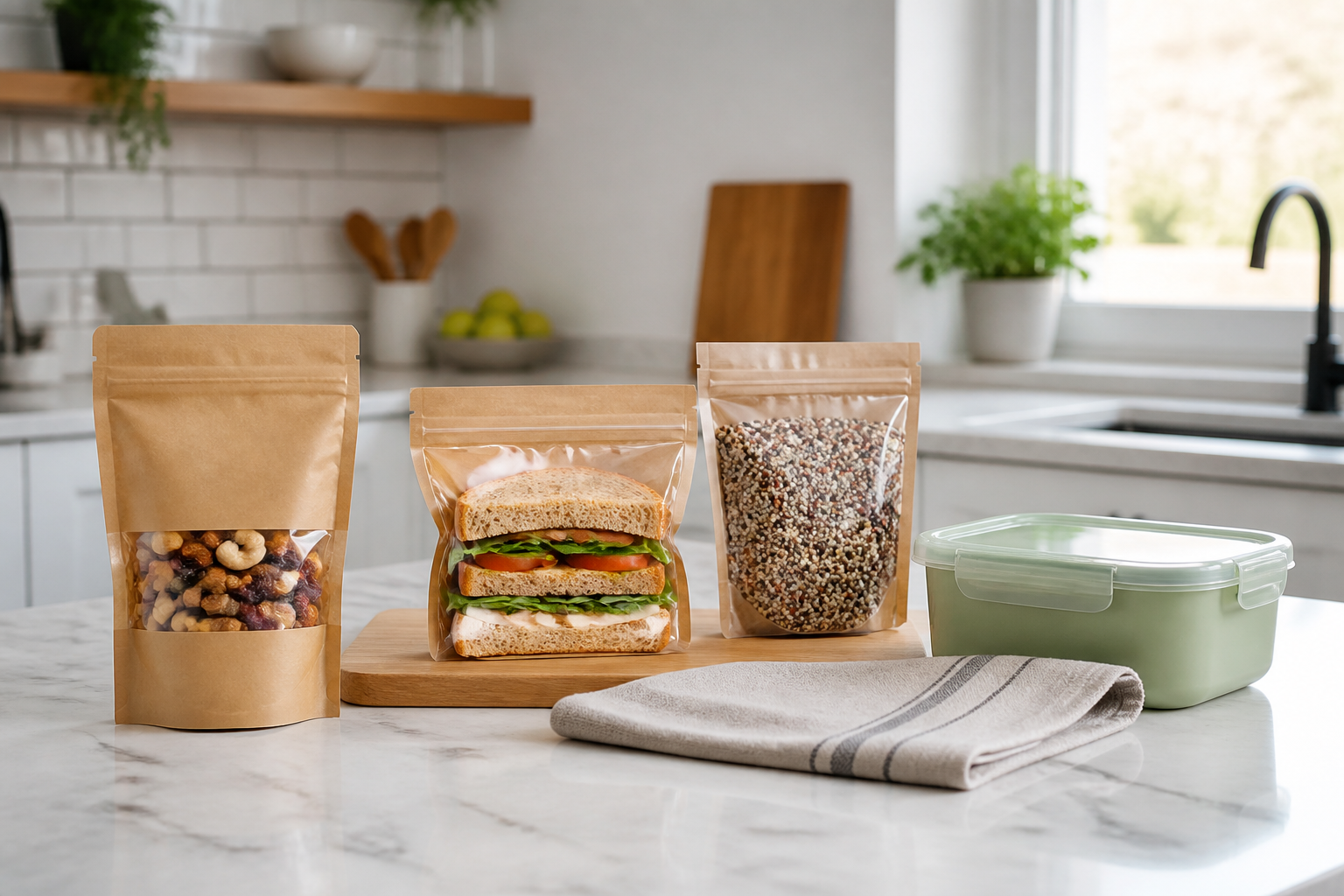
Portable meals are prepared in many homes each day. A sandwich pouch may be packed before work, a snack sachet may be placed in a school bag, and a grain or seasoning pack may be kept ready for quick meal preparation. These ordinary routines make packaging format an important part of convenience, storage and product protection.
For a packaging team, a suitable format depends on how the finished pack will be carried, opened and stored. A package that works well on a production line should also remain easy to identify, hold and close in the kitchen or lunch bag. Planning those details early can reduce changes later in the equipment discussion.
Portable meals also involve transitions between places. A pouch may move from a cupboard to a lunch bag, then to a desk or outdoor table. It can be pressed against other items, opened with one hand or kept for later use. These ordinary actions are useful when reviewing seal strength, grip area, package thickness and whether the format remains stable after partial use.
Describe the portable meal scenario
Start with the location and timing of use. A lunch pack may be handled in a kitchen, office, classroom, vehicle or outdoor setting. A small snack pouch may be consumed quickly, while a family pack may be divided into several portions. The expected routine helps define the pack size, seal area and material direction.
Note whether the package needs to sit upright, fit into a container or remain flat in a bag. These simple requirements often affect the choice between a pillow bag, stand-up pouch, sachet or gusseted format.
Balance compact size and easy opening
Portable packaging should use space efficiently without becoming difficult to handle. A small pouch can reduce loose items in a lunch bag, while a wider opening may make it easier to pour or share the product. A tear notch, zipper or resealing feature should be considered with the product texture and the expected number of openings.
Package geometry also affects the forming process. The width, seal position and film path should be defined together so that the finished pack is convenient for both the user and the production team.
Protect food during carrying and storage
A lunch pack can be moved several times before it is opened. The film and seals should match the expected handling, storage and product condition. Dry snacks may need protection from moisture, while products with a soft or irregular shape may need resistance to puncture during transport in a bag.
Keep the protection discussion practical. Product type, storage time, temperature and opening habits are more useful than choosing a material from a general label. Sample review can help confirm whether the package remains clean, stable and easy to open.
The outside of a lunch package may also contact other items in a bag. A smooth, clean surface can make the pack easier to handle, while a stable shape can help prevent crushing of soft food. Review the package after it has been carried, placed on a table and opened with the expected number of movements. These simple checks help connect the visual format with the real use experience.
Review filling and sealing requirements
The filling workflow depends on product flow, target fill and bag format. Powder, granule and snack products may use different dosing arrangements, while the seal geometry must suit the selected film. Cleaning access and changeover should also be considered when several products share a packaging line.
Huapai Machinery's powder and granule packing machine range can be used as a starting point for reviewing dry-product category options. The final machine and film combination should be checked against actual samples.
Test the pack inside a lunch bag
Representative samples should be handled in the same way as the intended customer routine. Place filled samples in a lunch bag or storage container, move them between locations, open the package and check the remaining product. Also check whether a partly used pack can be placed back in the lunch bag without losing stability during carrying. This links the sample review to the daily use case. Look for seal damage, leakage of loose material, difficult opening and poor stability after the package is placed down.
- Share the product texture, flow and expected portion.
- Define the intended bag dimensions and opening feature.
- Describe the storage or carrying environment.
- Review film tracking, sealing and cleaning access.
- Keep sample results linked to the real daily use.
Conclusion
Portable lunch packaging works when production requirements and daily handling are planned together. By considering size, opening, storage, protection and filling workflow from the beginning, packaging teams can develop a format that is practical at home and clear to evaluate on the production line.
← Back to News