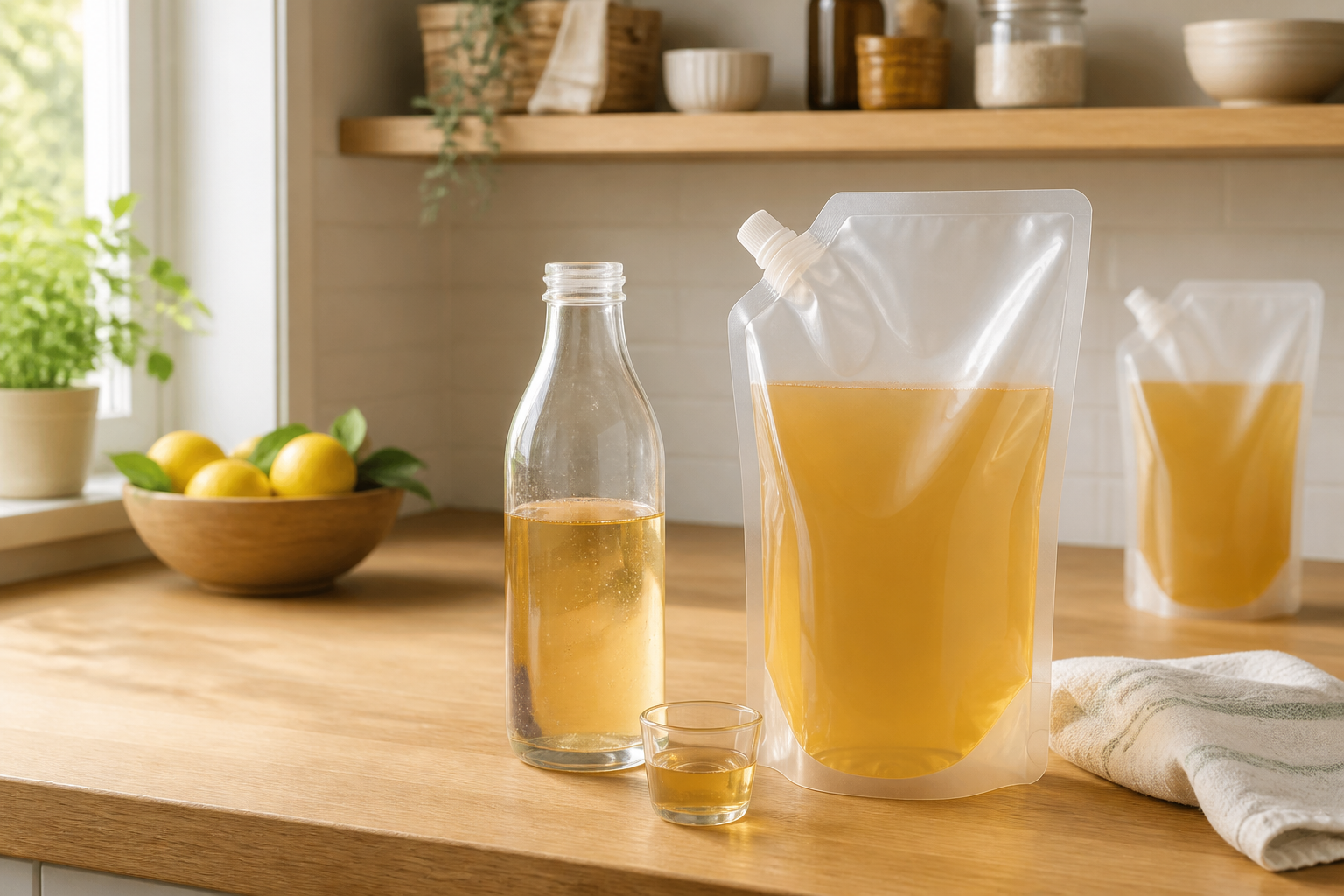
A liquid packing machine for sachets must be selected according to actual liquid behavior. This article concerns free-flowing liquids such as water, oil, juice and similar products. High-viscosity sauces or pastes require a separate sauce-packing evaluation and should not be treated as the same application.
Confirm liquid flow and filling suitability
Review viscosity, foaming, temperature behavior and any suspended particles with the finished liquid sample. A free-flowing liquid can follow a different filling route from a thick sauce. Define the target fill volume, required capacity, film specification and bag format before deciding on machine configuration.
Choose three-side-seal sachets or another bag route
Three-side-seal sachets are a practical route for small liquid packs when the published machine range and approved film are suitable. Back-seal bags and premade pouches are separate routes. The trial should confirm cut-off control, clean seal area, finished pouch shape and leakage resistance with the actual liquid.
Use verified liquid-machine boundaries
The HP-TP0520L is published for free-flowing liquids with a 5–99 ml range and three-side sealing. The HP-TP2130L is published for free-flowing liquids with a 200–999 ml range and three-side sealing. Bag size remains selected according to product requirements. Review the liquid packing machine range for the broader application route; for approved ready-made bags, use the premade pouch packing machine range.
Separate ordinary liquid from sauce requirements
Do not use the free-flowing liquid model recommendation for high-viscosity sauces without a separate material, pump and pouch review. Sauce products may need different filling equipment and should be evaluated through the sauce packing machine category.
Conclusion
Liquid sachet equipment selection depends on tested liquid flow, target volume, bag format and seal quality. Confirm the final machine only after the actual product and film have been reviewed.
← Back to News