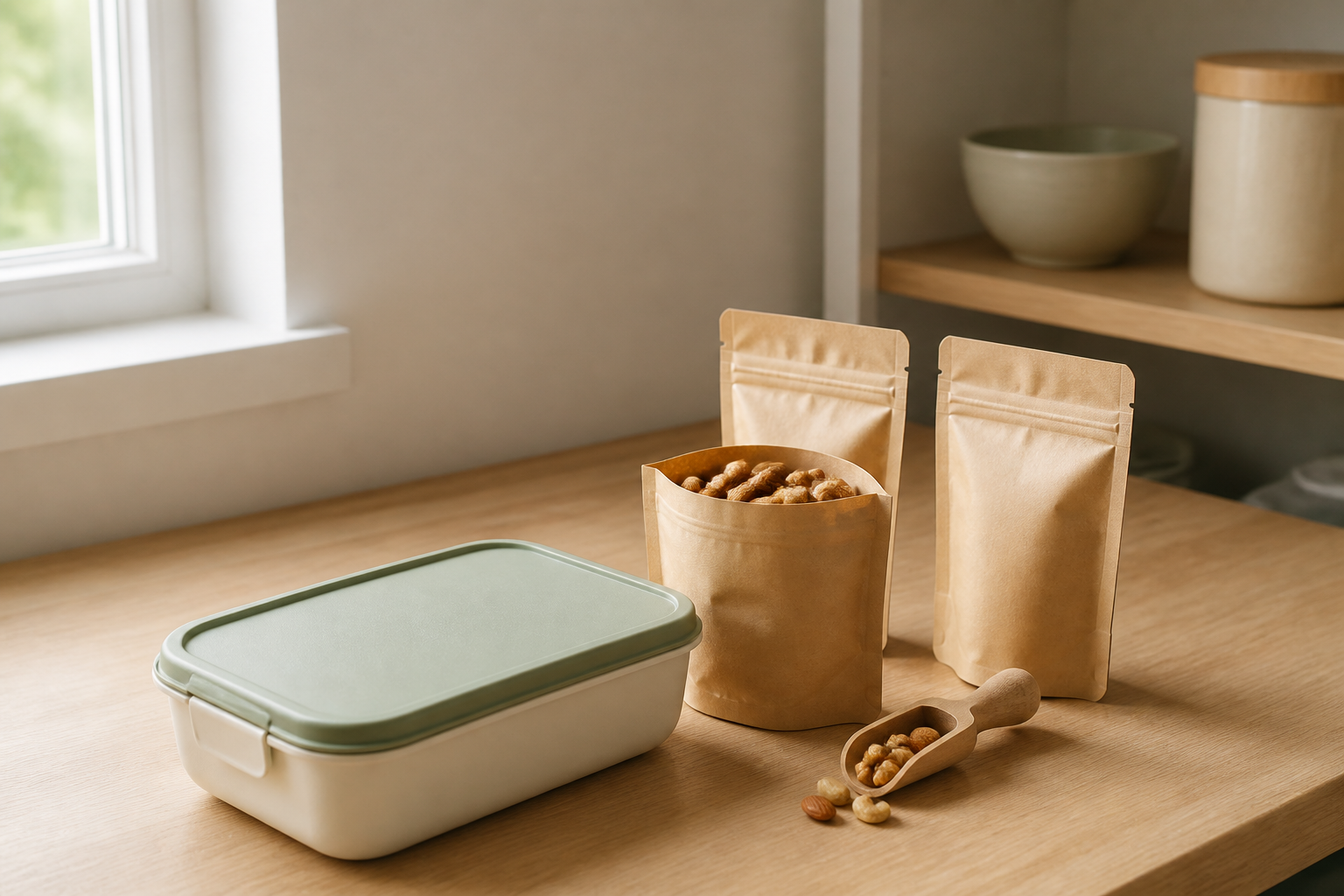
Snack portion packaging is part of an ordinary home routine. A handful of almonds may be prepared for a commute, raisins may be divided for a child’s lunch, and walnuts may be kept in a pantry container for later use. These moments show why a pack format should be evaluated together with the way the product is portioned, stored and opened.
For a packaging team, the useful question is not only how many grams fit in a pouch. It is how the filled pack moves from a storage shelf to a lunch bag, desk or kitchen counter. Nuts and dried fruit are dry, free-flowing materials, but their shape, size, surface and mix can influence weighing, filling, sealing and the final pack experience.
Start with the snack routine
Describe the moment when the package is used. A single portion may be opened beside a lunch container, while a larger family pack may be opened several times and returned to a pantry shelf. A pouch intended for travel needs a manageable size and a seal that supports the expected handling. A home refill pack may prioritize storage and easy transfer into a reusable container.
Write down the destination, opening frequency and portion pattern before choosing equipment. This simple routine map keeps the packaging decision connected to real use instead of treating every dry snack as the same application.
Choose a portion format for handling
Small flat sachets can suit single-use portions, while wider pouches may provide more room for mixed nuts or larger dried fruit pieces. A stand-up format can help when the filled pack needs to sit upright in a pantry or on a counter. The correct choice depends on product size, target fill, film width, bag length and how the consumer will hold the pack.
Opening is part of the format decision. A tear notch may support quick access during a commute, while a resealable structure may suit a pack used over several snack occasions. The package should also be easy to identify and store without relying on an oversized format that adds unnecessary handling.
Review material behavior and mix
Almonds, walnuts, raisins and dried cranberries do not have identical shapes or flow behavior. A mixed snack may include pieces with different sizes, surface textures and bulk densities. The filling review should therefore use representative samples rather than a generic dry material. If a recipe changes, the team should confirm how the new mix moves through the selected weighing and feeding setup.
Product handling also affects the seal area. Loose fragments or dust near the seal can affect the final package appearance and should be considered during sample review. Film tracking, seal width and the relationship between target fill and bag length should be checked together.
Connect the pack with granule equipment
The packaging format influences the machine workflow. A granule application may involve feeding, weighing, forming, filling and sealing in a coordinated sequence. The equipment discussion should cover the material, target weight, bag style, film width, expected capacity and the way operators will change between snack recipes.
Huapai Machinery’s powder and granule packing machine range provides a starting point for reviewing dry snack applications. When the project requires a ready-made pouch format, the premade pouch packing machine range can also be compared. The final configuration should be checked against actual nuts, dried fruit, film and package dimensions.
Test storage, transport and opening
Representative samples should be tested in the situations where the pack will be used. Fill the selected film, place the pack beside a lunch container, carry it in a bag and return a larger pack to its pantry position. Observe how easy it is to hold, open, pour or reseal. Check whether the filled pack remains stable and whether the seal area stays clean during handling.
- Define the snack mix, target portion and expected fill variation.
- Share the storage location, carrying route and opening frequency.
- Review bag width, bag length, film behavior and seal position.
- Test representative pieces, including larger nuts and smaller dried fruit.
- Record operator changeover and cleaning considerations for different recipes.
Conclusion
Snack portion packaging becomes easier to evaluate when the home routine is considered from the beginning. By connecting portion size, storage, opening, material behavior and sealing with the filling workflow, packaging teams can make a clearer decision about pouch format and equipment. A useful review starts with the real snack mix and ends with a pack that fits the way people store, carry and enjoy it.
← Back to News