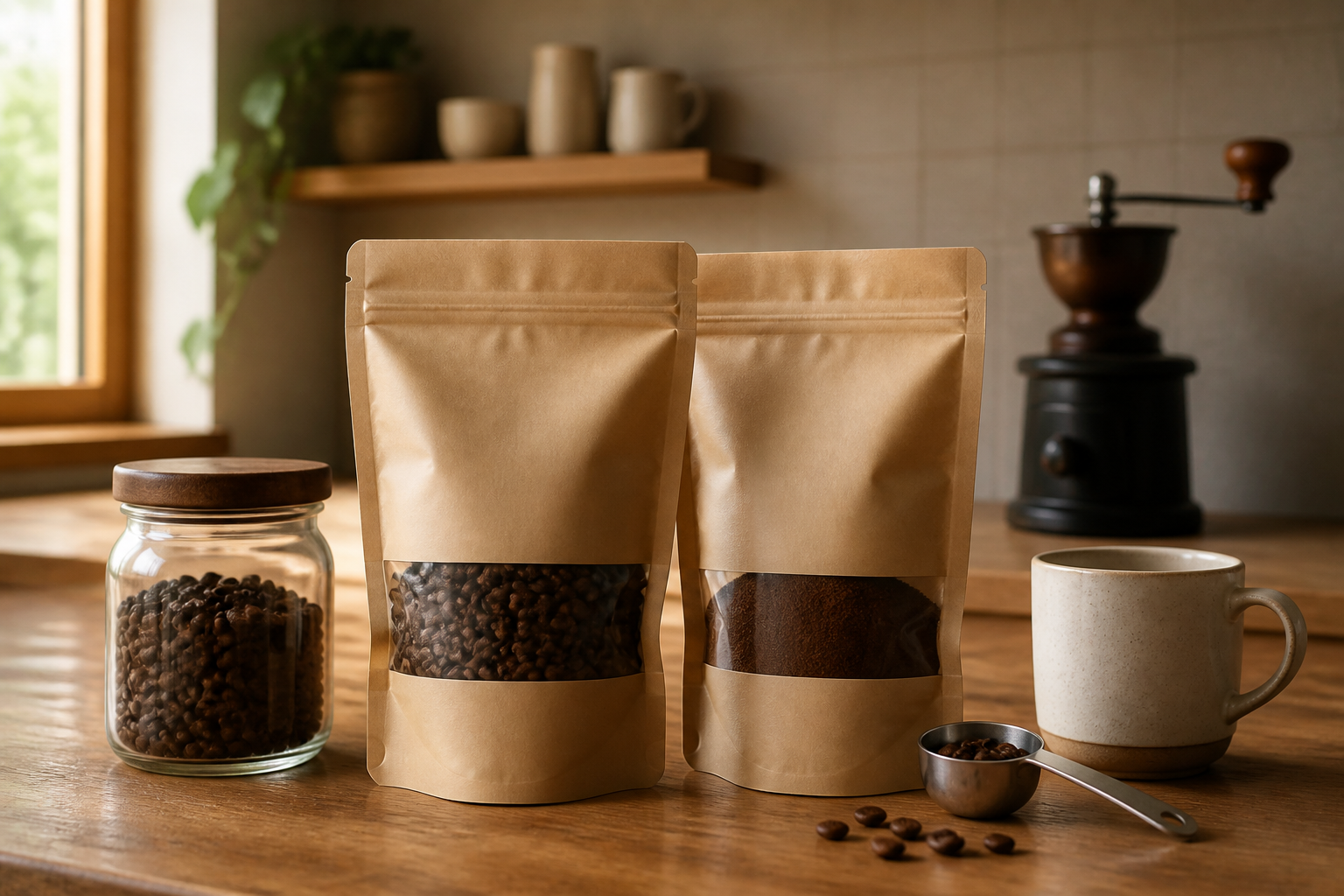
Coffee packaging is handled many times before the first cup is poured. A household may open a refill pouch, measure beans or powder, close the pack and return it to a shelf or counter. These repeated actions turn a simple packaging choice into a practical question: should the coffee be packed for a short daily cycle, a larger pantry refill or several brewing sessions?
For packaging teams, the answer connects the home brewing routine with the filling and sealing workflow. Coffee beans and coffee powder can require different handling during feeding, filling and cleaning. Reviewing the real use scene first helps clarify the bag style, portion pattern and machine information needed for a sensible equipment discussion.
Start with the home brewing routine
Map the pack from purchase to storage and use. Some households open a larger coffee refill once or twice a week, while others prefer smaller packs that are easy to carry between a pantry and a brewing area. A pack used beside a grinder may need a stable base and a wide opening, while a compact refill can prioritize easy handling in a crowded cupboard.
Record how often the package is opened, whether coffee is scooped or poured, and whether the user transfers the contents into a jar. These details help define the useful bag height, opening position and resealing expectation without assuming that one format suits every routine.
Separate bean and powder handling decisions
Whole coffee beans and ground coffee do not move through a filling system in the same way. Beans are larger and irregular, while coffee powder can be fine and dusty. The product condition, particle behavior and target pack size should therefore be reviewed before choosing a measuring and feeding approach.
Keep representative samples available for testing. Observe whether the beans flow consistently into the pack and whether powder settles cleanly away from the seal area. If a blend, roast style or grind changes, repeat the review because material behavior can affect the practical setup.
Choose a pouch format for storage
A stand-up pouch can make a coffee refill easy to identify and keep upright on a shelf. A smaller sachet can suit a measured portion intended for one preparation. A wider pouch may make pouring more controlled, while a compact format can help households organize several coffee varieties in one storage area.
Opening and resealing should be considered with the format. A tear notch can support quick access, and a resealable feature may be useful when a refill is used across several mornings. Film width, bag length, seal placement and the space needed for opening should be discussed together.
Review protection and seal cleanliness
Coffee is often selected for its aroma and familiar brewing experience, so packaging teams should review the intended barrier direction, seal condition and storage environment together. The practical aim is not to make unsupported claims about shelf life. It is to confirm that the proposed pack and sealing process fit the product, handling routine and storage plan.
Watch for powder near the seal area, beans caught in the sealing path or folds that make the closure difficult to inspect. These observations can guide film selection, filling sequence, cleaning steps and operator checks before a final configuration is discussed.
Connect the pack with machine selection
The coffee format affects the full packaging workflow, including feeding, measuring, forming, filling and sealing. Share the product state, target pack weight, bag style, bag dimensions, film information, expected changeover and available installation space when requesting a recommendation.
Huapai Machinery's powder and granule packing machine range can be reviewed for coffee powder and other dry materials. For a compact powder application, the HP-TP0520 powder packing machine page explains that final configuration depends on material flowability, packing weight, bag size and production requirements. If the project uses pre-made pouches, the premade pouch packing machine range offers another format to compare.
Test the pack in the kitchen context
Packaging samples should be handled where coffee is actually stored and prepared. Place a filled pack beside a jar, open it near the grinder, pour a portion into a brewing container and return the pack to its storage position. Check whether the user can control the pour, keep the seal clean and recognize the pack after repeated handling.
- Define whether the material is whole bean, ground coffee or a blend.
- Share the target pack weight, bag style, bag dimensions and film information.
- Observe opening frequency, resealing needs and storage location.
- Test representative samples through the intended feeding and filling review.
- Record cleaning, changeover and seal inspection considerations.
Prepare the information for a quotation. A useful inquiry should include the coffee condition, target weight, package style, bag size, film details and intended home or retail use scenario. Photographs of the product and proposed pouch can help clarify particle behavior, opening preferences and the available space around the finished pack.
These details give the packaging team a practical basis for discussing machine options and sample testing. The final setup should remain tied to the confirmed material and package rather than a generic assumption about coffee.
Conclusion
Coffee refill packaging links a familiar home brewing routine with decisions about pouch format, product handling, sealing and equipment. By reviewing how the pack is opened, poured, stored and reused, teams can prepare clearer information for machine selection. The next step is to test the actual coffee and proposed package before confirming the configuration.
← Back to News