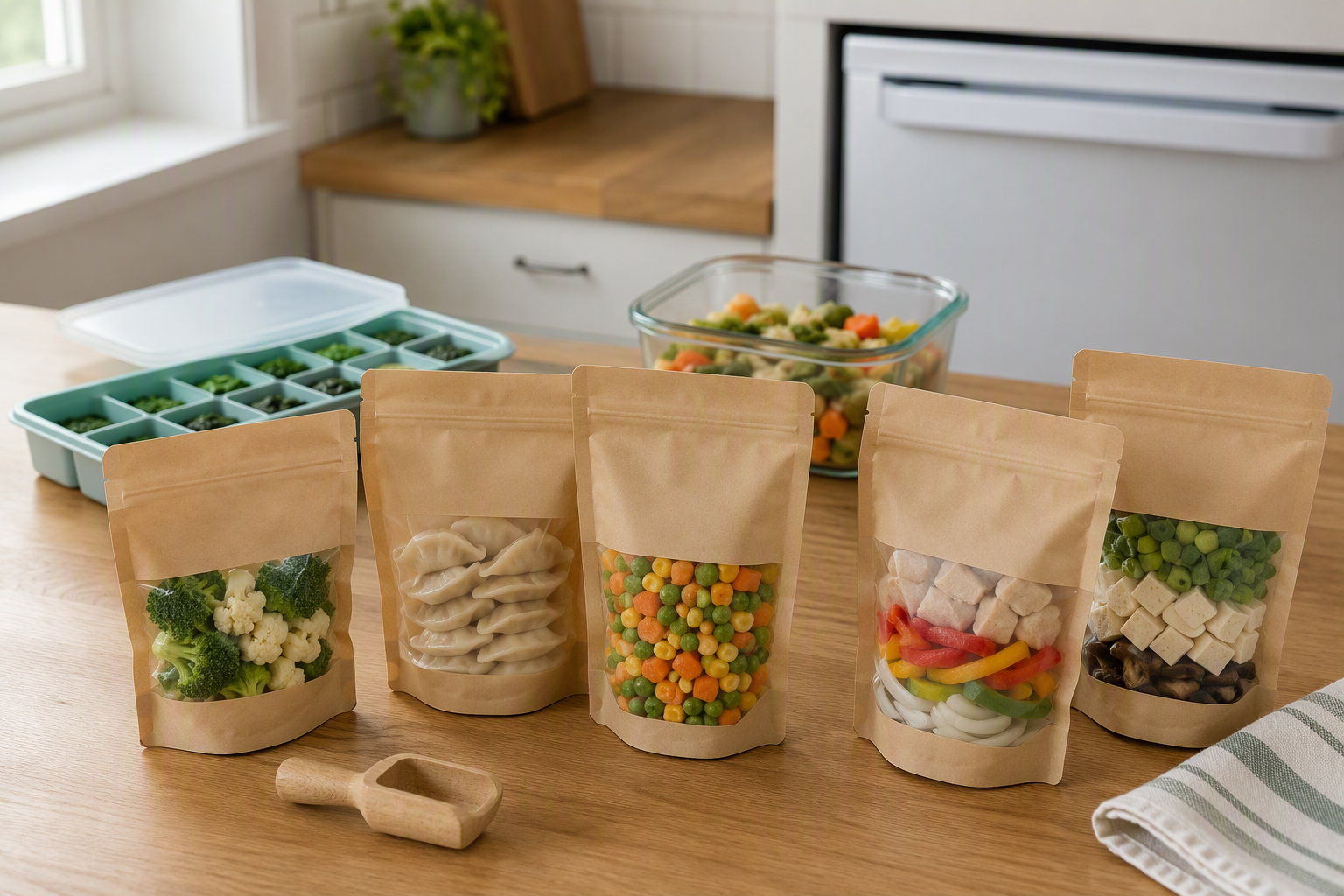
A frozen food packaging machine should be selected from the actual prepared-food product and package requirement. Frozen vegetables, dumplings, diced ingredients and portioned meal components can differ in piece size, surface moisture, breakage sensitivity and fill behavior. A B2B equipment brief should define the finished product, target pack, bag material, sealing requirement and required production workflow before a machine configuration is chosen.
Classify the frozen food product
Piece and block products need a filling route that can accommodate their size and shape without placing product in the seal area. Mixed prepared foods may also settle unevenly. Use representative frozen or chilled samples to review product feeding, target portion handling and clearance at the seal. The product should be evaluated in the condition in which it will be packed, not only as a dry reference sample.
Choose the packaging route before the machine
Vacuum packaging and premade-pouch filling are different routes. Vacuum packaging removes air before sealing when the product and bag specification call for that process. A premade pouch system fills an approved ready-made pouch using a configuration selected for the product characteristics, pouch type and packaging requirement. The decision should follow the approved package and product process; one route should not be substituted for the other without a sample review.
Review moisture control and seal stability
Cold or moist food surfaces can affect the final seal area. Confirm the pouch material, product temperature at filling, moisture control method and necessary clearance above the product. The selected seal should be trialed with the actual pouch and product so the team can inspect closure consistency, package handling and contamination control under the intended process.
Match Huapai equipment to the selected process
For applications that require air removal and sealed packaging, review the vacuum packing machine range. The published HP-320 vacuum model is listed for food, meat, seafood, grains and dry goods requiring vacuum packaging, with a 32 cm x 2 sealing length, 0.8 cm sealing width and a 2.1 L x 1 vacuum pump. Its suitability still depends on the actual product, bag size and vacuum requirement.
For approved ready-made pouches, review the premade pouch packing machine range, where feeding, measuring and filling systems are selected according to the product and pouch type. Dry granular frozen components that are packed through a suitable measuring route can also be reviewed within the powder and granule packing machine range; configuration must be confirmed against the real product and bag route.
Prepare a prepared-food packaging inquiry
- Provide the actual prepared-food sample and identify pieces, moisture or coating conditions.
- State target fill, pouch type, bag dimensions, film construction and sealing requirement.
- Clarify whether vacuum removal is required or the project uses premade pouches without vacuum.
- Validate product handling, fill clearance, sealing and finished-pack condition with a representative run.
Conclusion
Frozen food packaging is a product-handling and process-selection decision. The final machine route should be based on the tested food form, approved package, sealing requirement and confirmed vacuum or pouch-filling process.
← Back to News