Mixed Nuts Refill Packaging: Transitioning from Bulk to Home Storage
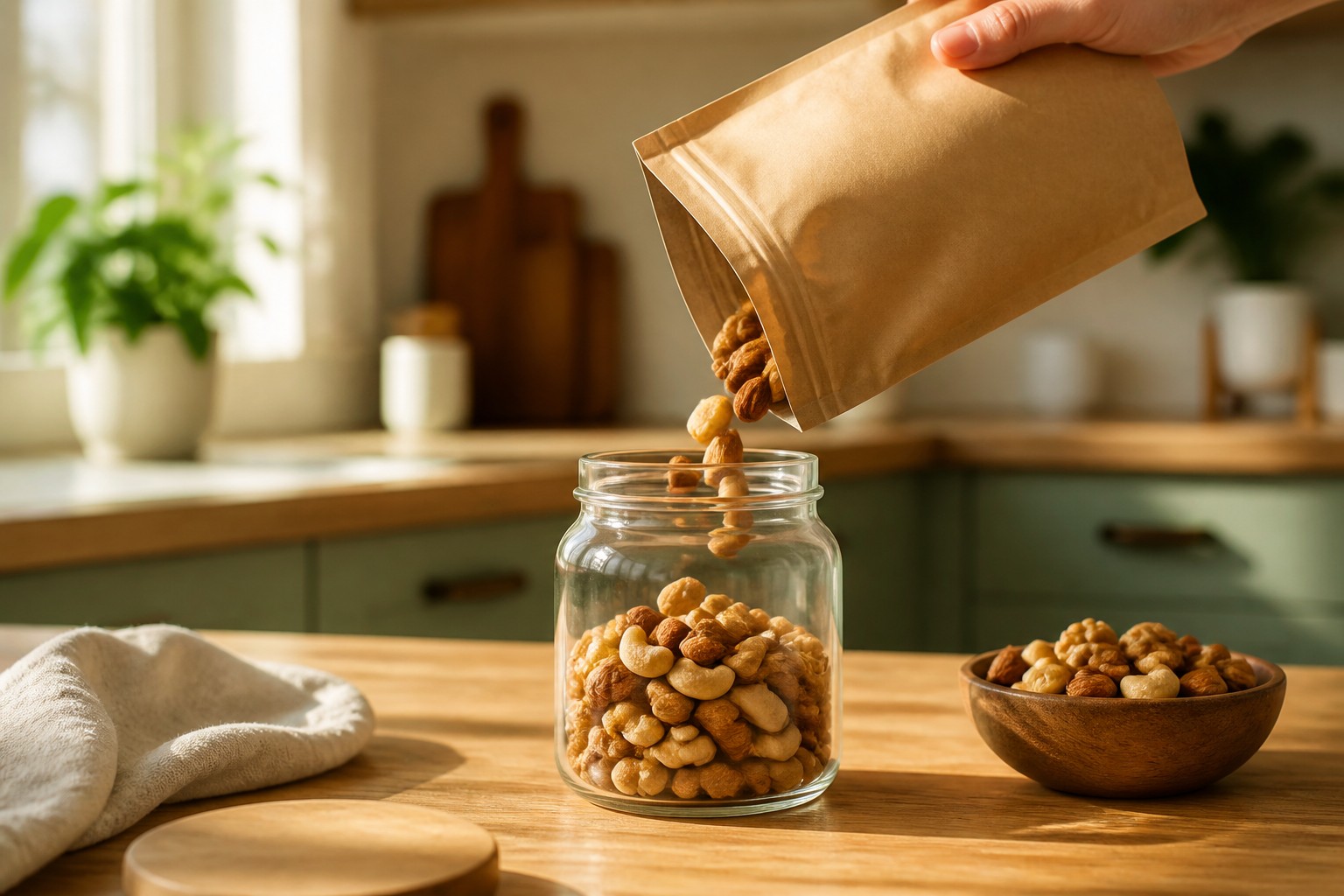
Mixed nuts, including almonds, cashews, and walnuts, are a staple in many households, often transitioning from a bulk refill pouch to a dedicated storage jar on the kitchen counter. This routine is more than just a matter of convenience; it defines how the packaging should be designed for freshness, handling, and environmental efficiency. For packaging manufacturers, understanding this home storage routine is critical for selecting the right materials and machinery.
The move toward larger refill formats reduces individual package waste while providing a cost-effective solution for families. However, a larger pouch size also introduces challenges in maintaining product integrity and ease of use. A successful refill pack must bridge the gap between the retail shelf and the daily kitchen routine, ensuring that the nuts remain crisp and flavorful until the last serving is consumed.
The Rise of Bulk Nut Refills in Daily Kitchen Routines
Consumers are increasingly choosing bulk refill pouches for snacks like mixed nuts to reduce plastic usage and manage kitchen inventory. A typical routine involves purchasing a larger quantity, such as 500g or 1kg, and refilling a smaller, accessible jar for daily use. This behavior shifts the focus of the package from a single-serve container to a durable storage and transfer tool.
Observing this routine helps identify where traditional packaging may fail. If a pouch is too difficult to pour from, or if the opening does not align with common jar widths, the user may experience spills or frustration. A refill pack should support the transition from bulk to jar seamlessly, reflecting a practical understanding of home kitchen space.
Mapping the Transition from Retail Pouch to Home Jar
The journey of a nut refill starts at the point of sale and ends at the kitchen storage area. Throughout this transition, the pouch is handled multiple times—carried, stored in a pantry, opened, and tilted for pouring. Each step requires the pouch to maintain its structure. A pouch that collapses or tears easily during pouring adds unnecessary mess to the kitchen routine.
By mapping these touchpoints, packaging teams can determine the ideal pouch height, width, and stability. A stand-up pouch with a stable base is often preferred as it can remain upright on the counter while the user handles the jar. This functional design serves the real-world application of the product.
Pouch Material and Barrier Requirements for Freshness
Mixed nuts are sensitive to oxygen and moisture, which can lead to rancidity and a loss of crispness. The refill pouch must provide a reliable barrier even after it has been opened. Multi-layer laminate films, often including a metallized layer or high-barrier PE, are used to protect the nuts from light and air. The material choice must balance barrier performance with the flexibility needed for a refill format.
Matte finishes or kraft paper laminates are common for a natural look, but they must still incorporate internal barrier layers to ensure shelf life. Testing the material with actual nut samples helps verify that the seal remains airtight and that the barrier holds up under varying pantry conditions.
Ergonomic Pouch Design for Easy Pouring and Handling
Pouring a variety of nut sizes from a large pouch into a narrow jar requires a controlled opening. The design of the tear notch and the optional resealable zipper must be precise. A zipper that is difficult to align or a tear that strays into the seal area can compromise the package and the user experience. The grip area should be comfortable for a range of hand sizes, providing stability during the pour.
Consider the angle at which the pouch is held. An ergonomic design ensures that the weight of the nuts is distributed evenly, allowing for a steady flow into the jar. These small design choices make a significant difference in how the product is perceived in a busy kitchen environment.
Selecting the Right Filling System for Mixed Granules
Mixed nuts represent a varied granule application where different sizes, weights, and textures must be handled simultaneously. Selecting the right dosing system is essential for maintaining a consistent mix and preventing damage to the nuts. A multi-head weigher is typically the preferred configuration for high-accuracy weighing of mixed nut varieties.
The equipment should be adjusted to handle the specific nut blend without crushing or separating the components. The powder & granule packing machine range offers standard configurations for these applications. For projects requiring premade pouches, the 200-type powder & granule premade pouch packaging machine provides a reliable starting point for configuration discussions. Additionally, the HP-TP0520 small packing machine and the HP-BP0520 powder and granule machine can be used for smaller batches or specific nut blends.
Final Packaging Validation Through Real-Life Use Cases
Validation should go beyond technical seal checks; it must involve handling the filled pack in a simulated kitchen environment. Pouring trials with different jar sizes help confirm that the pouch opening is correctly sized. Storage tests in common pantry temperatures verify that the barrier layers are performing as intended. This real-life validation ensures that the packaging meets the actual needs of the household.
- Evaluate pouch stability when standing on a flat kitchen counter.
- Confirm the ease of opening and the reliability of the resealable zipper.
- Check the pour control for a mix of different nut sizes and shapes.
- Verify oxygen and moisture barrier performance over the intended use period.
- Compare the refill pouch handling with common home storage jar dimensions.
Conclusion. Mixed nuts refill packaging serves a critical role in the modern kitchen, transitioning bulk quantities into daily home storage. By focusing on ergonomic handling, reliable barriers, and precise filling systems, packaging teams can deliver a solution that supports the user's routine while maintaining product freshness. The right configuration starts with observing the real-life journey of the pack from the store to the jar.
← Back to News