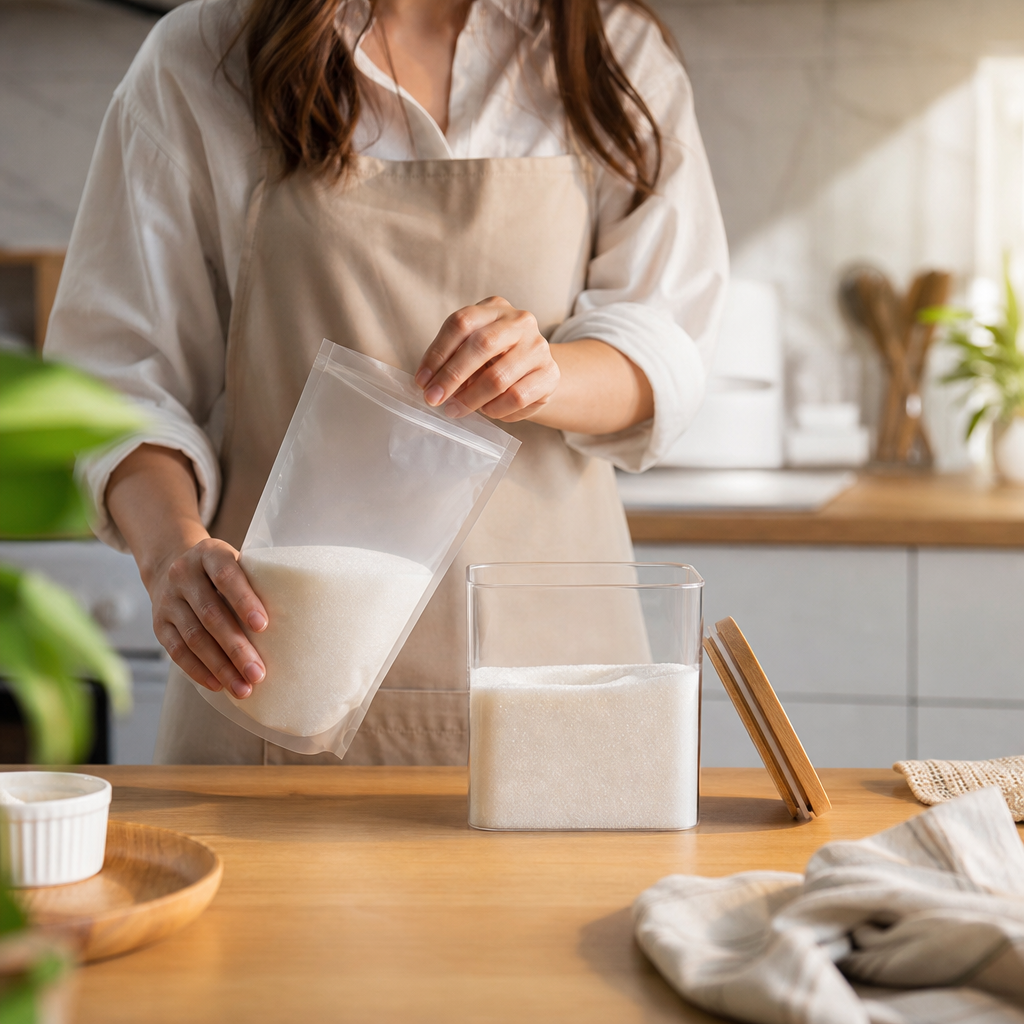
Sugar is a staple in every kitchen. Whether it's for morning coffee, baking a weekend treat, or daily cooking, having a reliable supply of sugar is essential. The trend towards refillable packaging has transformed how we store and use sugar, making it more sustainable and efficient. Understanding the nuances of sugar refill packaging can help households and manufacturers alike optimize their kitchen routines.
For manufacturers, providing sugar in refill packs is not just about sustainability; it's about matching the lifestyle of modern consumers who value convenience and quality. In this guide, we explore how sugar refill packaging impacts the daily kitchen workflow and what equipment is needed to produce high-quality refill packs.
The Rising Demand for Home Sugar Refill Packs
Modern households are increasingly moving away from bulky, single-use sugar containers towards more compact refill packs. These refill pouches are easier to store in pantry drawers and can be transferred into elegant kitchen jars as needed. This shift is driven by a desire for better organization and a reduction in packaging waste. Manufacturers who offer sugar in versatile refill formats are well-positioned to meet this growing consumer preference. The convenience of having a slim, lightweight pouch that fits perfectly into existing kitchen storage systems cannot be overstated. As urban living spaces become more optimized, the demand for space-saving packaging solutions continues to climb, making refill packs a central part of the modern grocery landscape.
Why Efficient Packaging Matters for Sugar Refills
Sugar is a free-flowing granular material that requires precise handling to avoid spills and ensure consistent portion sizes. Efficient packaging ensures that the sugar remains dry, clump-free, and easy to pour. The choice of film and sealing method plays a critical role in maintaining the shelf life of the sugar and protecting it from moisture in the kitchen environment. A well-designed refill pack makes the transfer process seamless for the user. Moisture is the primary enemy of granulated sugar, as even slight humidity can cause clumping, making it difficult to measure for baking or cooking recipes. High-barrier film structures are essential to prevent moisture ingress during storage and transportation.
In addition to moisture protection, the physical strength of the pouch is vital. Refill packs often go through a rigorous supply chain before reaching the consumer's kitchen. A puncture-resistant film ensures that the sugar stays inside the bag, preventing costly leaks and messy cleanups. The sealing integrity of the top and bottom edges must be absolute, yet easy enough for the consumer to open when needed. This balance between strength and accessibility is what defines a high-quality sugar refill pack in the eyes of the modern shopper.
Choosing the Right Granule Packing Machine for Sugar
Selecting the appropriate equipment is key to producing sugar refill packs that meet market standards. For granular materials like sugar, a dedicated granule packing machine is necessary. These machines are designed to handle free-flowing particles with high accuracy, ensuring that each pouch contains the correct weight. Depending on the production volume, manufacturers can choose from small, medium, or large series models to fit their facility's needs. Accuracy in weighing is not just a regulatory requirement; it is a direct contributor to the manufacturer's bottom line. Overfilling results in product loss, while underfilling leads to consumer dissatisfaction and potential legal issues.
When evaluating machinery, manufacturers should consider the ease of cleaning and maintenance. Sugar dust can accumulate in mechanical parts, potentially affecting machine longevity and hygiene. Stainless steel construction and accessible components are essential for a clean production environment. Huapai Machinery focuses on providing equipment that is both durable and easy to maintain, ensuring that manufacturers can achieve consistent output with minimal downtime. The ability to switch between different pouch sizes and weights quickly is also a major advantage in a dynamic market.
Key Features of Modern Sugar Refill Packaging Equipment
Modern packaging machines for sugar refills come equipped with features that enhance production efficiency and product quality. For instance, the HP-TP0520 model offers a compact solution for small to medium-sized refill pouches. Key features to look for include adjustable filling ranges, high-speed sealing, and user-friendly control systems. These functions allow manufacturers to quickly adapt to different pouch sizes and market demands. Integration of advanced sensors ensures that every pack is filled within the specified tolerance, while automatic film tracking maintains perfect alignment for every seal.
Enhancing Kitchen Efficiency with Reliable Packaging Solutions
Reliable packaging solutions contribute directly to kitchen efficiency. A sturdy, well-sealed sugar pouch prevents accidental tears and leaks, keeping the pantry clean. Furthermore, features like resealable zippers or easy-tear notches make the packaging more user-friendly. By investing in high-quality packaging equipment, manufacturers can deliver a product that integrates perfectly into the consumer's daily routine, building brand loyalty through practical value. Imagine a busy morning where a consumer needs to refill their sugar jar before the first cup of coffee; a pack that opens cleanly and pours without splashing is a small but significant detail that improves their day.
Moreover, the use of transparent windows in the pouch design allows users to see the quality and quantity of the sugar at a glance. This visual confirmation builds trust and helps the consumer plan their next purchase. For manufacturers, this means that the packaging machine must handle the film gently to avoid scratches or fogging of the transparent sections. A high-performance packaging line ensures that the final product looks as good as it functions, representing the brand's commitment to quality in every kitchen across the globe.
Sustainability and Economic Benefits of Sugar Refills
Sugar refill packs are generally more cost-effective for both the manufacturer and the consumer. They require less material than rigid containers, reducing production costs and environmental impact. Additionally, refill pouches are lighter and take up less space during shipping, leading to lower transportation emissions. Promoting refills as a sustainable choice aligns with global efforts to reduce plastic usage and appeals to eco-conscious buyers. The economic advantage extends beyond the purchase price; for manufacturers, the storage of empty flexible pouches takes up a fraction of the space required for empty cans or boxes, optimizing warehouse logistics and reducing overhead costs. This efficiency translates into a more competitive product on the shelf.
Conclusion. Sugar refill packaging is a practical and visionary response to the needs of modern kitchens. By focusing on efficient portioning, reliable moisture-barrier sealing, and high-quality granule packing equipment, manufacturers can provide a product that truly enhances the user's daily kitchen routine. Choosing the right machinery, such as the precision solutions offered by Huapai Machinery, is the essential first step towards optimizing your production line for the rapidly growing refill market. As we look towards the future of food packaging, the sugar refill pouch stands out as a symbol of practical innovation—bringing together convenience, efficiency, and sustainability in every pack. Investing in this technology today ensures that your brand remains at the forefront of the consumer's mind and kitchen shelf for years to come.
← Back to News