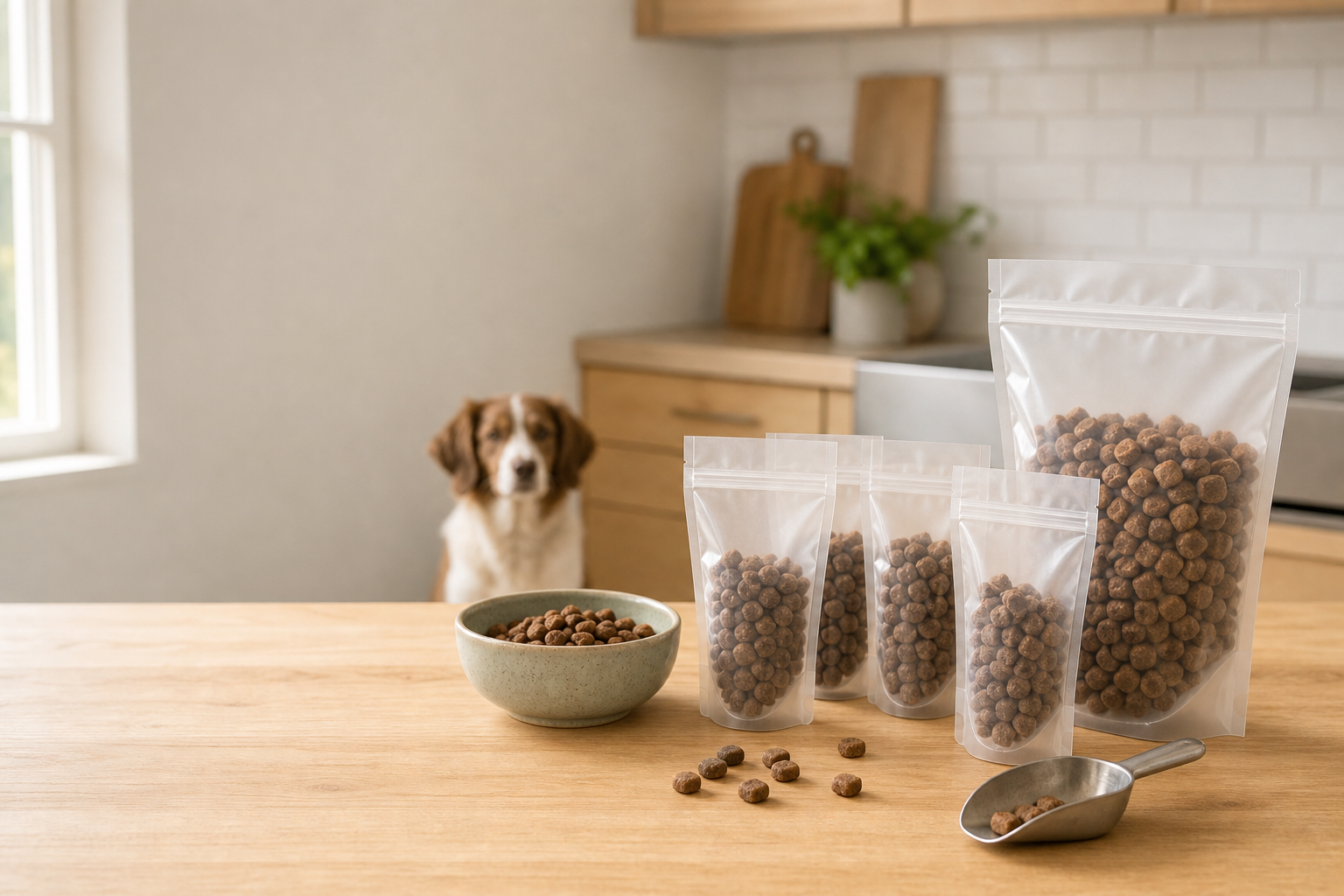
Dog training often happens in short moments: a walk, a practice session in the living room, or a quick reward after a calm response. For pet food producers and small snack businesses, that everyday rhythm offers a practical way to review dog treat packaging. A useful pack should fit the portion routine, protect the product during storage, remain easy to handle and connect with the way people carry treats through the day.
Define the training portion before choosing the pack
Dog treats may be used as individual rewards, a small handful during a session or a larger refill kept in the pantry. These uses lead to different packaging decisions. A compact pouch can be convenient for a walk or short training period, while a larger pouch may suit home storage and regular replenishment of a smaller container.
Start by describing the real use pattern rather than selecting a format from appearance alone. Note when the pack is opened, how often the product is handled and whether the owner pours treats into a bowl, pocket pouch or training container. This brief helps the packaging team connect portion size, opening style and pack footprint to a clear daily application.
Match pouch format to home and outdoor handling
A dog treat pouch may move between a kitchen shelf, a cupboard and an outdoor training bag. The package should therefore be considered as part of that complete journey. Stand-up formats can make pantry storage more organized, while flatter formats may fit a drawer or a small carry bag. A resealable opening can also be reviewed when the product is used over several sessions.
Film selection, seal area and pouch dimensions should be checked together. The filled pack needs to remain stable during ordinary handling, and the opening should be easy to identify without adding unsupported claims to the pack. Sample reviews with the actual treat shape help confirm whether the proposed format is comfortable to fill, store and reopen.
Consider treat shape and flow during filling
Dog treats can vary from small round pieces to irregular biscuits or mixed shapes. That variation affects how the product moves through a feeding and measuring system. A trial should observe whether the treats flow consistently, whether the portion reaches the intended fill level and whether fragments collect around the seal area.
Real product samples matter because shape, density and surface texture influence the filling route. The purpose of a trial is to connect the treat blend, film and bag format with a workable machine configuration. Recording the result gives the production team a factual basis for adjusting the pouch, feeder or measuring method.
Review granule packing options for dog treats
For free-flowing dry treats, Huapai's powder and granule packing machine solutions provide a starting point for discussing feeding, measuring, sealing and bag layout. The product page explains that different measuring and feeding systems can be selected according to product characteristics, so the final setup should be reviewed with the actual treat sample.
When a business has already selected a stand-up or zipper pouch, a premade pouch packing machine can be considered for the next evaluation step. Pouch dimensions, opening style and the required filling system should be confirmed together, rather than treating the machine and pouch as separate decisions.
Compare small portions with pantry refills
Training portions and pantry refills serve different moments in the same household routine. A small pack can support carrying and short sessions, while a refill pack can reduce the number of times the storage supply needs to be replenished. The choice also affects carton arrangement, labeling space, warehouse handling and the amount of packaging material used per purchase unit.
Write these decisions into one packaging brief: portion format, pouch footprint, opening method, resealing expectation, treat shape, storage location and intended handling steps. A shared brief keeps product, packaging and engineering teams focused on the same application and makes sample comparisons easier to document.
Use a practical dog treat packaging trial checklist
A useful trial can compare several real samples on filling behavior, seal cleanliness, pouch stability, opening experience and storage fit. Review the filled packs after the handling steps they are expected to face, such as moving from a pantry shelf to a training bag. Record observations about broken pieces, product in the seal area, pouch balance and the ease of taking a portion.
Huapai's HP-TP0520 small powder packing machine page also shows why the material, target packing range, bag size and packaging format should be supplied before a machine configuration is discussed. For dog treats, the final selection should follow product testing and the required pouch format. A clear daily routine brief helps keep the equipment conversation practical and connected to the product's real use.
Planning a Dog Treat Packaging Line?
Share your treat shape, pouch format and portion requirements with the Huapai team.
Discuss Your Packaging Application