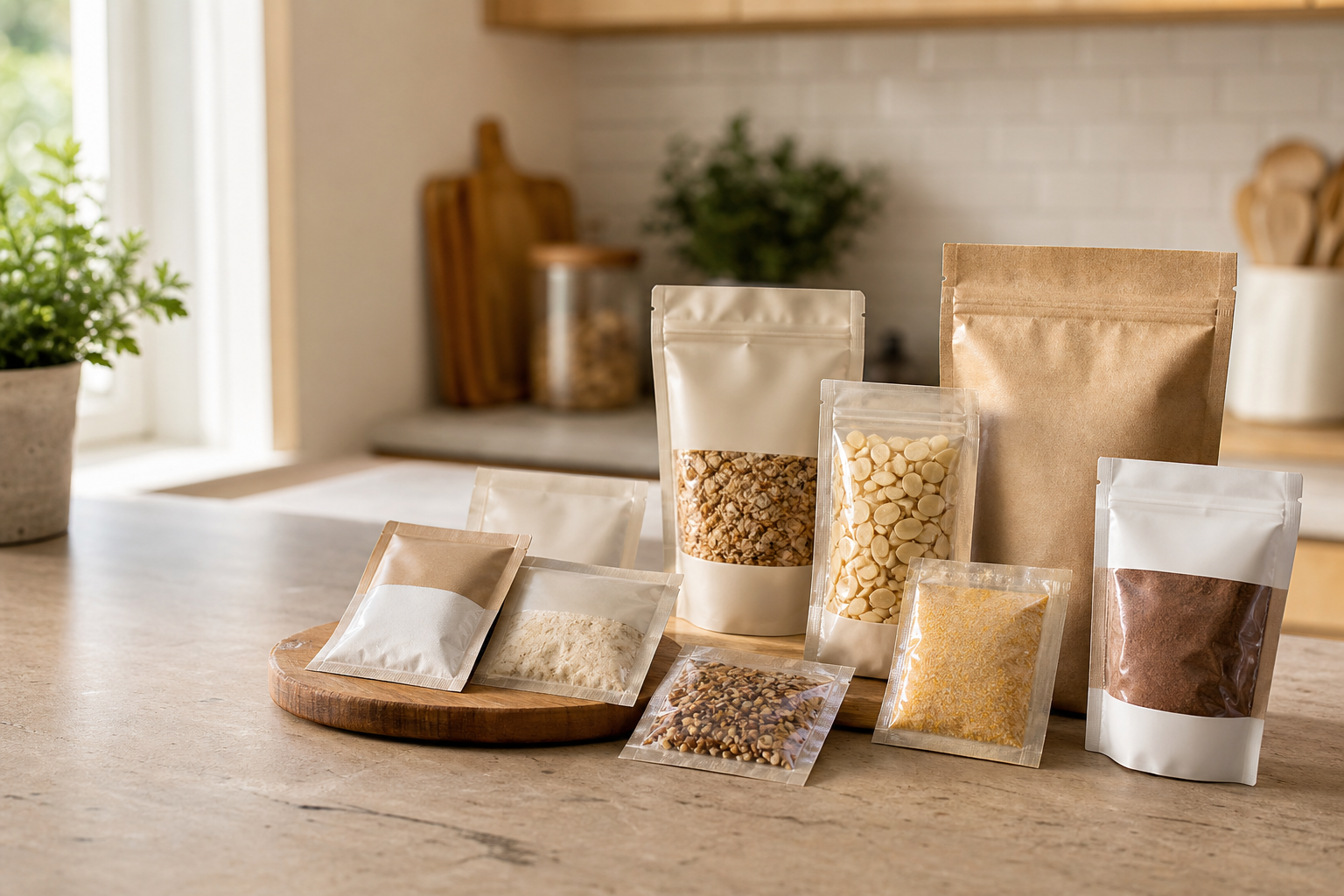
In modern domestic kitchens and pantries, single-serve sachets and small portion pouches play an essential role in daily meal preparation. From single-origin instant coffee powders and functional drink mixes to precise spice blends and soup seasonings, portioned packaging protects ingredients from humidity while making portion measurement straightforward. For food processors, spice blenders, and contract packaging businesses, deciding between a three-side seal sachet and a back-seal (pillow pouch) format is one of the most frequent packaging engineering decisions.
Understand how three-side seal and back-seal pouches shape daily food handling
Every packaging format creates a distinct interaction for the end consumer. A three-side seal pouch features flat perimeter seals along three edges, creating a slender, planar sachet that lies flat inside secondary cartons or kitchen drawer organizers. This flat profile provides a neat surface for branding text and directions, making it popular for single-use drink mixes, yeast powders, and tabletop seasoning portions.
In contrast, a back-seal pouch (often termed a pillow pouch or center-fin pouch) is formed from a continuous film tube with a longitudinal seam running down the reverse side, complemented by top and bottom transverse end seals. This geometry allows the body of the pouch to expand outward naturally when filled, accommodating higher volumetric capacities or irregular particle shapes without requiring wider film roll widths. Observing how consumers open and empty the pouch during cooking routines helps identify which geometry delivers better dispensing convenience.
Compare pouch footprint and sealing geometry for compact portions
When selecting between three-side and back-seal formats, packaging teams must evaluate total film utilization alongside printable surface area. Three-side seal sachets dedicate perimeter margin area to lateral heat seals, which leaves a flat and stable central pocket. This makes three-side sealing well-suited for high-density powders where thinness and stackability are primary logistics considerations.
Back-seal pouches, on the other hand, eliminate lateral side seals, allowing the entire front face of the pouch to remain uninterrupted for branding, product descriptions, and cooking instructions. Furthermore, because the pillow configuration expands in three dimensions, it typically achieves a larger fill volume for an equivalent linear length of packaging film roll. Reviewing carton packing patterns and retail shelf footprints helps clarify which configuration optimizes distribution logistics.
Evaluate product flow characteristics for fine powders and small granules
The physical behavior of the food ingredient directly influences sealing cleanliness and machine performance. Fine powdered materials, such as matcha, protein powders, and bakery mixes, can generate airborne dusting during high-speed vertical drops. If fine particulates drift into the sealing jaw area during closure, seal integrity can be compromised.
Granular products, including raw cane sugar, coarse sea salt, and dry seasoning granules, flow rapidly through volumetric feeding tubes. The internal cavity of a back-seal pouch provides a wider aperture directly below the forming shoulder, which assists rapid material descent. For both powder and granule applications, thorough testing with real ingredient samples is essential to configure appropriate dust extraction, deaeration channels, and anti-static discharge bars.
Review vertical and pillow packing machinery configurations
Equipment selection should align closely with the target pouch style and product properties. For free-flowing dry ingredients and seasonings, Huapai's powder and granule packing machine solutions offer versatile configurations for precision auger dosing, volumetric cup feeding, and multi-lane sachet formation. These modular vertical form-fill-seal (VFFS) platforms allow manufacturers to adjust pouch lengths and sealing temperatures to match various laminated barrier films.
When packaging larger volume snacks, confectionery items, or solid baking ingredients requiring a traditional pillow profile, Huapai's pillow and back-seal packaging machines provide continuous longitudinal fin-sealing and rotary cut-off mechanisms. For small-scale specialty producers, startup seasoning lines, or multi-SKU pilot facilities, the HP-TP0520 small automatic packing machine provides an accessible, compact footprint designed for flexible bag forming, accurate weighing, and clean date-coding integration.
Balance single-serve portion packaging with multi-pack storage routines
In home pantries, individual sachets rarely exist in isolation; they are commonly grouped into multipack stand-up pouches, dispenser boxes, or reusable countertop caddies. A three-side seal pouch's flat profile allows dense, orderly shingling inside retail cartons, reducing secondary carton volume and freight costs. Conversely, back-seal pillow pouches offer tactile flexibility and natural cushioning when packed loosely into bulk outer bags.
Packaging engineers should model the full packaging lifecycle—from reel unwinding and dosing to secondary boxing and pantry storage. Documenting film gauge requirements, moisture barrier properties, notch tear characteristics, and carton fill density provides clear technical criteria for selecting the most appropriate pouch format.
Establish a practical trial checklist for pouch sealing and line testing
Before standardizing on a new pouch geometry or procuring packaging machinery, conducting structured validation trials is highly recommended. A practical packaging trial protocol should assess the following parameters with actual production-grade ingredients:
1. Seal Hermeticity and Leak Resistance: Inspect transverse and longitudinal seals under vacuum chamber testing to confirm consistent seal bonding across temperature variations.
2. Dust Management and Seal Area Cleanliness: Observe whether fine dust accumulates near top seals during high-speed filling cycles.
3. Dispensing and Tear Notch Ergonomics: Evaluate how easily consumers can initiate tear propagation and pour ingredients into narrow-necked bottles or cooking pots.
4. Volumetric Fill Ratio: Verify that the selected pouch dimensions provide sufficient headspace above the product line to prevent material entrapment during horizontal heat-sealing.
By coupling clear consumer use requirements with empirical machine testing, food manufacturers can implement reliable, high-efficiency packaging lines that protect product freshness and enhance the daily cooking experience.
Planning a Sachet or Pillow Pouch Packaging Line?
Share your powder or granule properties, pouch dimensions, and portion requirements with the Huapai engineering team.
Discuss Your Packaging Application