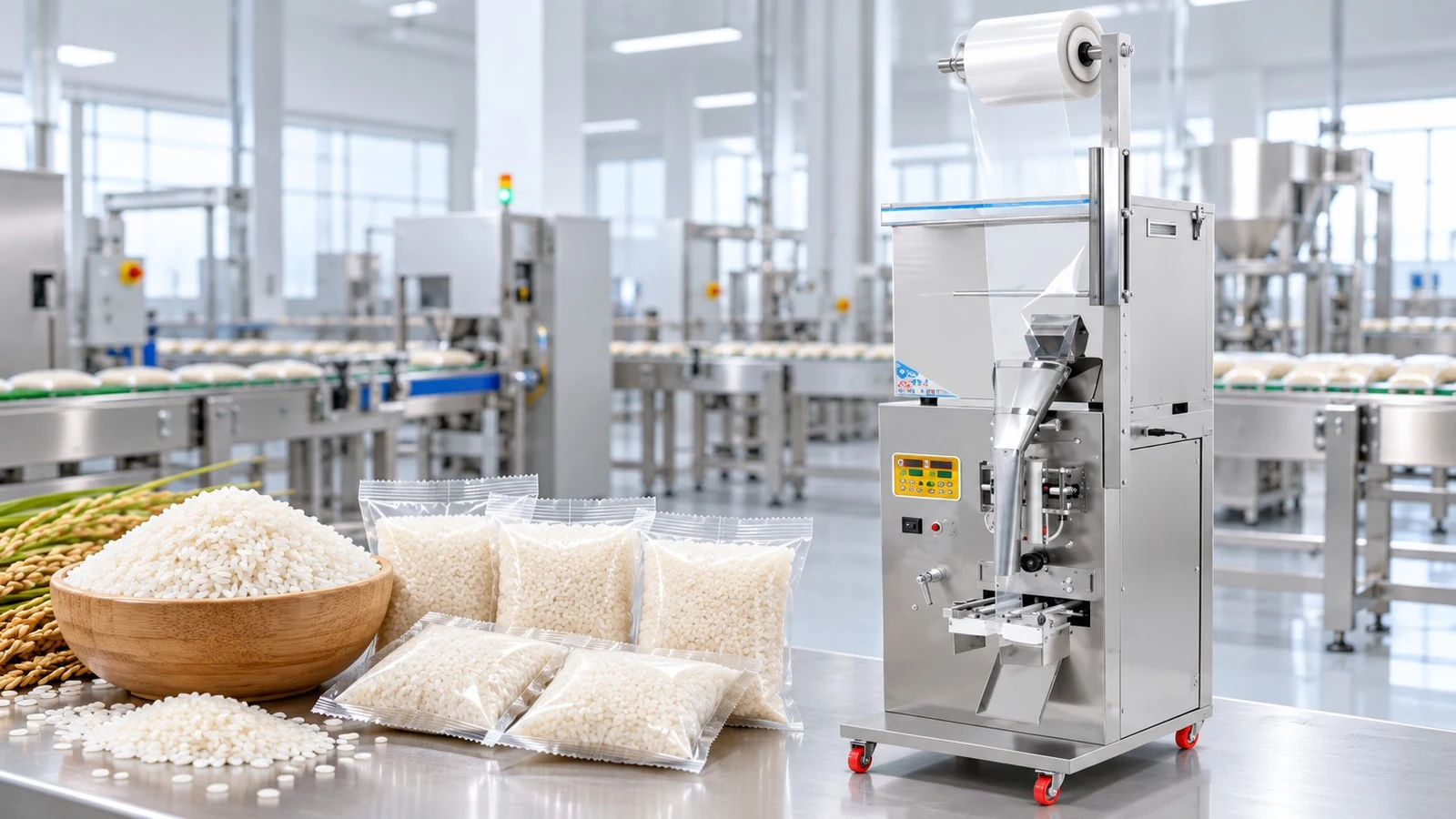
Rice, multigrain mixtures, brown rice, and specialty cereal grains represent staple food products where packaging quality directly impacts shelf life, visual presentation, and logistics efficiency. In commercial grain processing and retail distribution, producers face the continuous challenge of preserving freshness, preventing moisture absorption, eliminating insect infestation, and ensuring that packaged goods withstand long-distance transport.
While traditional non-vacuum plastic bags or woven sacks allow loose grain movement and retain atmospheric air, brick-shape vacuum packaging has become the preferred industrial standard for premium rice and grain products. By combining negative-pressure air evacuation with precise mechanical shaping and airtight heat sealing, vacuum packaging transforms loose grains into solid, geometric brick packages.
This technical guide introduces the working principles, equipment configurations, pouch material requirements, and operational steps of automatic rice and grain vacuum packaging machines within our comprehensive range of industrial vacuum packing machines and granule packaging solutions.
Why Vacuum Packaging Is Essential for Rice and Mixed Grains
Grains and cereals are sensitive organic commodities that naturally interact with their surrounding atmosphere. Packaging rice under vacuum conditions provides several distinct technical benefits:
- Oxygen Depletion & Insect Prevention: Eliminating air inside the package creates an anaerobic environment, stopping insect eggs (such as rice weevils) from hatching and preventing aerobic bacterial growth.
- Moisture & Mold Control: Vacuum sealing prevents atmospheric humidity from entering the bag, keeping grain moisture levels stable and avoiding mold or rancidity.
- Flavor & Aroma Preservation: Fatty acids in polished rice and mixed grains oxidize when exposed to air, causing staleness. Vacuum packaging retains natural grain fragrance and culinary quality.
- Structural Rigidity: When air is evacuated, atmospheric pressure compresses the grains tightly against each other, creating a solid, impact-resistant block that resists shifting during handling.
Watch the Video: Real Factory Vacuum Sealing Operation
The following video demonstrates the real-time operational sequence of our automatic rice and grain vacuum packing machine in a factory testing environment. It shows how the pre-filled side-gusset grain pouch is placed onto the pneumatic holding cradle, followed by vacuum extraction, brick-shape cavity compression, and instantaneous heat sealing.
How the Brick-Shape Grain Vacuum Packaging Machine Operates
Industrial rice vacuum packing machines integrate pneumatic actuation, vacuum extraction nozzles, shaping molds, and impulse heating bars into a synchronized workflow:
- Pouch Positioning: The operator or automated infeed places the filled side-gusset grain bag onto the adjustable pneumatic base plate, aligning the pouch mouth with the sealing station.
- Air Evacuation (Vacuum Extraction): Vacuum suction nozzles insert into the bag opening. High-performance vacuum pumps rapidly draw out internal air to the target negative pressure level.
- Brick-Shape Mold Forming: Lateral pneumatic shaping plates press firmly against the pouch walls. As air is evacuated, the loose rice particles settle tightly into a clean six-sided rectangular brick profile.
- Airtight Heat Sealing: High-precision heating elements clamp the pouch top under regulated pressure and temperature, fusing the multi-layer barrier film.
- Cooling & Discharge: The heating bars open, leaving a flat, airtight seal. The finished rigid grain brick is discharged for downstream boxing and palletizing.
Logistics and Retail Advantages of Brick-Shaped Packaging
Beyond product preservation, brick-shaped vacuum pouches offer substantial operational advantages across the entire supply chain:
- Optimized Pallet & Container Space: Regular rectangular packages stack neatly with zero wasted airspace, increasing transport container loading volume compared to loose pillow pouches.
- Zero Abrasion & Puncturing: Because grains are held immovably in a solid block, internal friction between grains during transit is minimized, preventing broken rice kernels and interior pouch wear.
- Excellent Retail Shelf Display: Flat bottom and vertical sidewalls allow the package to stand upright independently on supermarket shelves, providing a premium consumer appearance.
Packaging Film Requirements for Grain Vacuum Sealing
Achieving a reliable, durable vacuum seal requires using barrier films with appropriate puncture resistance and airtight properties. Typical packaging materials include:
- PA/PE (Nylon / Polyethylene): Multi-layer coextruded or laminated composite film offering high tensile strength, exceptional puncture resistance against sharp grain husks, and reliable low-temperature heat sealability.
- PET/PA/PE: Three-layer laminated film providing superior exterior gloss, clear printing capability, high mechanical toughness, and strong oxygen barrier properties.
- Thickness Considerations: Grain vacuum pouches typically range from 100 to 180 microns total thickness, depending on pouch weight (e.g., 500g, 1kg, 2.5kg, 5kg).
Technical Specifications Overview for Grain Vacuum Packagers
| Applicable Products | Rice, brown rice, multigrain mixtures, beans, millet, quinoa, grains |
|---|---|
| Package Style | Six-sided brick pouch / Side-gusset vacuum pouch / Flat vacuum bag |
| Bag Weight Range | 250g, 500g, 1kg, 2.5kg, 5kg (customizable by mold size) |
| Sealing Type | Airtight impulse heat sealing with pneumatic clamping |
| Air Evacuation | Internal vacuum nozzle / Negative pressure pump system |
| Machine Construction | Food-grade SUS304 stainless steel contact parts |
| Drive System | Pneumatic + Electric control system |
| Power Standard | 220V / 380V, 50/60Hz (customizable for international standards) |
Note: Specific speeds and mold configurations depend on target bag dimensions, grain density, and vacuum dwell settings.
Information to Prepare When Selecting a Grain Vacuum Machine
To ensure proper equipment sizing and mold selection, grain producers should confirm the following project details:
- Grain Type: Polished white rice, brown rice, sticky rice, or multigrain blends with varying kernel shapes.
- Target Weight & Dimensions: Target net weight per pouch (e.g., 1kg or 2.5kg) and required brick length, width, and depth.
- Pouch Material & Style: Pre-made side-gusset bags, flat vacuum bags, or roll film specifications.
- Target Output Rate: Required production output (bags per hour or bags per shift).
- Factory Utility Standards: Available electrical voltage, frequency, and compressed air supply capacity.
Looking to Upgrade Your Rice & Grain Vacuum Packaging Line?
Share your grain specifications, target brick dimensions, and capacity goals with our engineering team for customized machinery recommendations.
Contact Huapai Machinery for Engineering Consultation