 HUAPAI
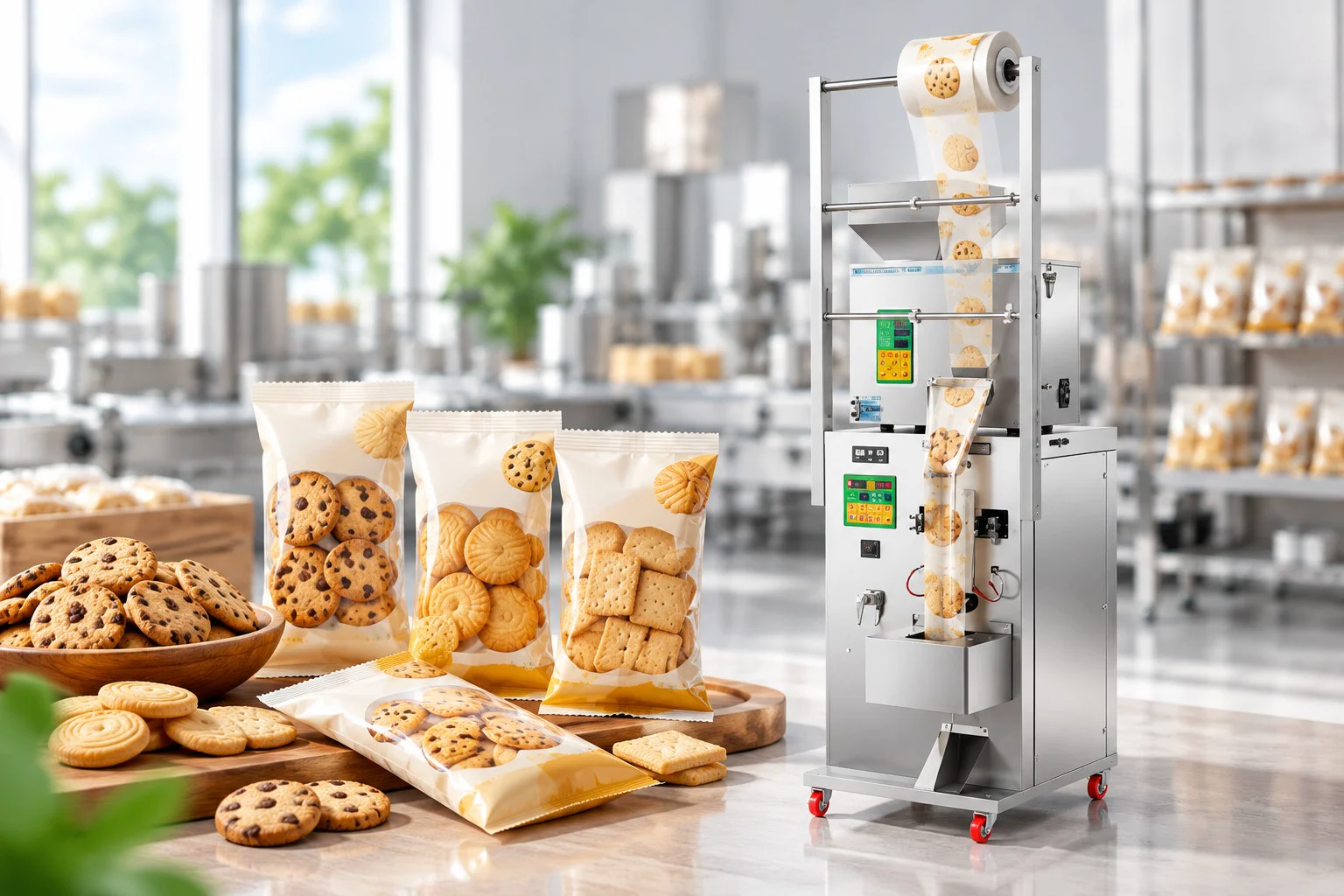
Crispy snack foods such as potato chips, tortilla crisps, and extruded snack wafers require specialized handling during automated packaging. Their fragile structure makes them susceptible to breakage, while high surface oil and seasoning residue pose challenges for clean heat sealing. Vertical Form-Fill-Seal (VFFS) systems integrated with protective gas flushing and smooth takeaway conveyors provide an efficient solution for snack food manufacturers.
This technical guide analyzes a vertical snack packaging trial conducted at the Huapai facility, breaking down the forming collar dynamics, back-seal pillow pouch construction, crumb prevention mechanisms, and key considerations for equipment selection.
1. Application Pain Points in Potato Chips & Crispy Snack Packaging
Automated snack packaging lines face three core operational challenges: product breakage during feeding, oil contamination in the sealing zone, and oxygen-induced rancidity during shelf storage. Addressing these factors requires coordinated mechanical and pneumatic engineering:
- Fragility & Breakage: Excessive drop heights or steep chute angles cause thin potato slices to shatter into crumbs, reducing visual appeal and customer satisfaction.
- Seal Contamination: Oil mists and seasoning dust settling on longitudinal or cross-seal film surfaces can compromise hermetic seal strength, leading to micro-leaks and loss of crispness.
- Oxidation & Shelf-Life Decay: Fried snacks exposed to ambient oxygen rapidly lose freshness. Nitrogen gas flushing creates an internal inert cushion that shields fragile chips and displaces oxygen.
2. Factory Video: VFFS Forming Collar, Air Cushion Filling & Conveyor Output
The factory demonstration video below captures a continuous vertical form-fill-seal packaging sequence for crispy snack chips. Roll film is drawn over a precision stainless steel forming shoulder into a tubular sleeve, where the back-seam is thermally sealed. Dosed snack chips enter through the central filling tube with protective gas cushioning before horizontal jaws seal and separate the finished pillow packs onto a flighted discharge conveyor.
Key checkpoints observed in this footage include the smooth film tracking across the forming shoulder, positive air inflation inside the pouch body, and the gentle transfer of filled packs onto the inclined discharge conveyor.
3. Step-by-Step Working Principle of Vertical Form-Fill-Seal System
- Film Web Unwinding & Tension Control: Roll-stock packaging film is fed through motorized dancing rollers that maintain constant web tension and photo-sensor eye-mark registration.
- Tubular Sleeve Forming: The flat film web wraps around the custom-engineered forming collar, converting into a vertical tubular shape with overlapping back edges.
- Longitudinal Back Sealing: Heated vertical sealing bars or friction belts apply controlled temperature and pressure to create a strong, continuous center-back fin or lap seal.
- Snack Dosing & Gas Flushing: Weighed batches of chips drop through the core tube while an integrated nitrogen lance injects food-grade gas to form an inflated protective cushion.
- Cross Sealing, Cutting & Discharge: Pneumatically or servo-driven horizontal sealing jaws close the top seam of the filled bag and the bottom seam of the next pouch, cutting the finished pack onto the takeaway conveyor.
Synchronizing film pull speed with sealing jaw dwell time ensures wrinkle-free pouch edges and airtight seal integrity across high-speed packaging runs.
4. Hygiene, Anti-Breakage, and Crumb-Prevention Design Considerations
To preserve product integrity and comply with strict food safety regulations, snack packaging machines incorporate several anti-breakage and hygienic design features:
Low-Impact Transition Chutes: Polished stainless steel transition chutes with gentle slope angles guide snack chips smoothly into the pouch without sharp impacts. Dimpled or textured contact surfaces prevent oily chips from adhering to hopper walls.
Sanitary Stainless Steel Construction: All product-contact components are manufactured from food-grade SUS304 (or optional SUS316) stainless steel, featuring smooth radiused corners for rapid washdown and allergen changeovers.
Pneumatic Crumb Strippers: Dedicated stripping motions prior to seal jaw closure push residual chip fragments downward away from the seal zone, preventing trapped debris in the heat-seal seam.
5. Pouch Style, Nitrogen Flushing, and Barrier Film Selection
Selecting suitable packaging materials and pouch formats directly influences snack shelf life, visual brand presentation, and retail durability:
- Pillow Pouch (Back Seal): The industry-standard format for potato chips, offering high packaging speed, efficient film utilization, and reliable inflatable cushion volume.
- Gusseted Pouch Tooling: An optional forming attachment that folds side gussets into the pouch base for improved retail shelf stability and upright display.
- High-Barrier Laminates: Multi-layer composite films such as BOPP/VMPET/PE or Matt-BOPP/VMCPP provide strong barriers against moisture vapor transmission, oxygen ingress, and ultraviolet light.
- Nitrogen Injection Ratio: Residual oxygen levels below 1.5%–2.0% are typically targeted to maintain crisp texture and prevent oil rancidity over extended distribution cycles.
6. General Technical Parameter Table
| Observed Material | Crispy potato chips, snack crisps, and extruded snack wafers handled during factory demonstration. |
|---|---|
| Packaging Mechanism | Continuous Vertical Form-Fill-Seal (VFFS) with motorized film advance and pneumatic seal actuation. |
| Pouch Format | Center-back seal pillow pouch (optional side gusset tooling available upon project request). |
| Sealing Type | Longitudinal heat seal combined with serrated transverse end seal and integrated cutoff knife. |
| Contact Materials | Food-grade SUS304 stainless steel product-contact contact surfaces and sanitary forming tube. |
| Integrated Modules | Forming collar, photo-sensor tracking, nitrogen flush interface, transparent safety interlock, discharge conveyor. |
| Project-Specific Variables | Operating speed (bags/min), target fill weight (g), bag dimensions (W×L), and electrical rating depend on client line layout. |
Exact performance parameters require material density verification, film sample testing, and weighing module selection.
7. Information to Prepare for a Customized Quote
When requesting an engineering proposal or customized quote for a potato chip packaging line, providing clear product and operational details will expedite technical configuration:
- Product type, average chip dimensions, bulk density (g/L), and fragility characteristics.
- Target pack weight range (e.g., 20g, 40g, 80g, 150g) and acceptable weighing tolerance.
- Pouch dimensions (flat width and bag length) and desired bag style (pillow vs. gusseted).
- Film roll structure (e.g., BOPP/VMPET/PE), total roll diameter, and film thickness (microns).
- Target production output (bags per minute or packs per shift) and shift duration.
- Facility utilities (voltage, frequency, phase, and compressed air supply capacity).
Browse our complete range of granule and snack packaging machines to compare solutions, or get in touch with our engineering team below.
Planning a Snack Packaging Project?
Share your snack specifications, target pouch dimensions, and output requirements for an engineered assessment with Huapai Machinery.
Prepare a Project Inquiry